Informazioni su · JCB 542-70Panoramica
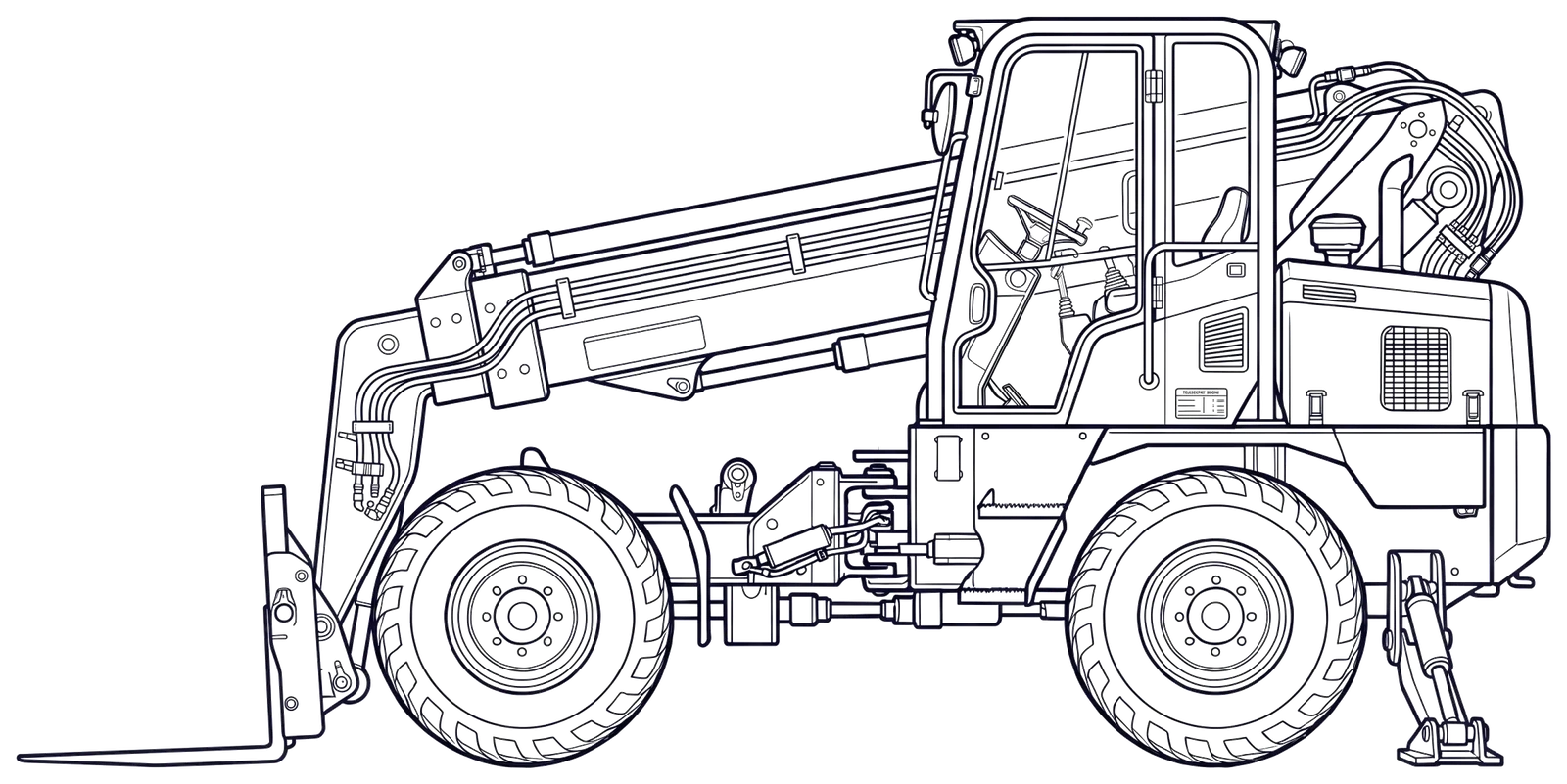
The JCB 542-70 is a rough-terrain telescopic handler in the mid-capacity telehandler class, operating at 8300 kg and delivering 125 hp. It is designed for heavy lifting and load-placing tasks across construction and agricultural environments where a combination of reach, lift capacity, and all-terrain mobility is required. The 542-70 designation indicates a machine in the upper-middle tier of JCB's agricultural and construction telehandler range, positioned for demanding site conditions.
Applicazioni tipicheDove viene utilizzata questa macchina
Telehandlers of this class are used for materials handling on construction sites, including placing structural components, moving palletised loads, and feeding concrete or block work at height. In agricultural settings, machines in this category handle baled forage, bulk materials, and equipment across uneven ground. The combination of telescopic reach and interchangeable attachment capability makes this class suitable for contractors, hire fleets, and large farms requiring a single versatile machine across multiple task types.
Ispezione del mercato dell'usatoCosa controllare prima dell'acquisto
When inspecting a telehandler of this class, prioritise a full extension and retraction cycle of the boom under load to identify any hesitation, drift, or hydraulic weeping at cylinder seals. Check the carriage tilting and side-shift functions if fitted, and inspect the boom wear pads for uneven contact. Examine the front and rear axle oscillation joints, which are high-wear points on rough-terrain machines, and verify that all four-wheel-steer modes engage and disengage cleanly. Tyre condition and evenness of wear across the axles indicate how the machine has been operated and whether alignment has been maintained. Request full service records and confirm that transmission oil and filter changes align with manufacturer intervals. For any machine with a quick-release hitch, test the locking mechanism with at least two different attachment types before purchase.
Mercato attualePosizionamento di prezzo
The JCB 542-70 sits in the mid-to-upper segment of the rough-terrain telehandler class, where it is regularly cross-shopped against the Manitou MLT741 and the Merlo P40.9. All three compete on lift capacity, reach, and overall capability at similar operating weights, making specification detail and condition the primary differentiators for buyers. The Manitou MLT741 is a direct capacity competitor with a comparable market presence in hire and construction fleets, while the Merlo P40.9 is frequently preferred in agricultural applications for its load-sensing hydraulics and rotating frame variants. Within the JCB 542-70 population, factors that move a unit within its pricing band include recorded service hours, attachment configuration, whether a quick-release hitch is fitted, cab specification level, tyre wear, and overall structural condition. Machines from managed hire fleets with full service documentation typically attract stronger buyer interest than privately sold units with incomplete histories.