Informazioni su · Wacker Neuson DW20Panoramica
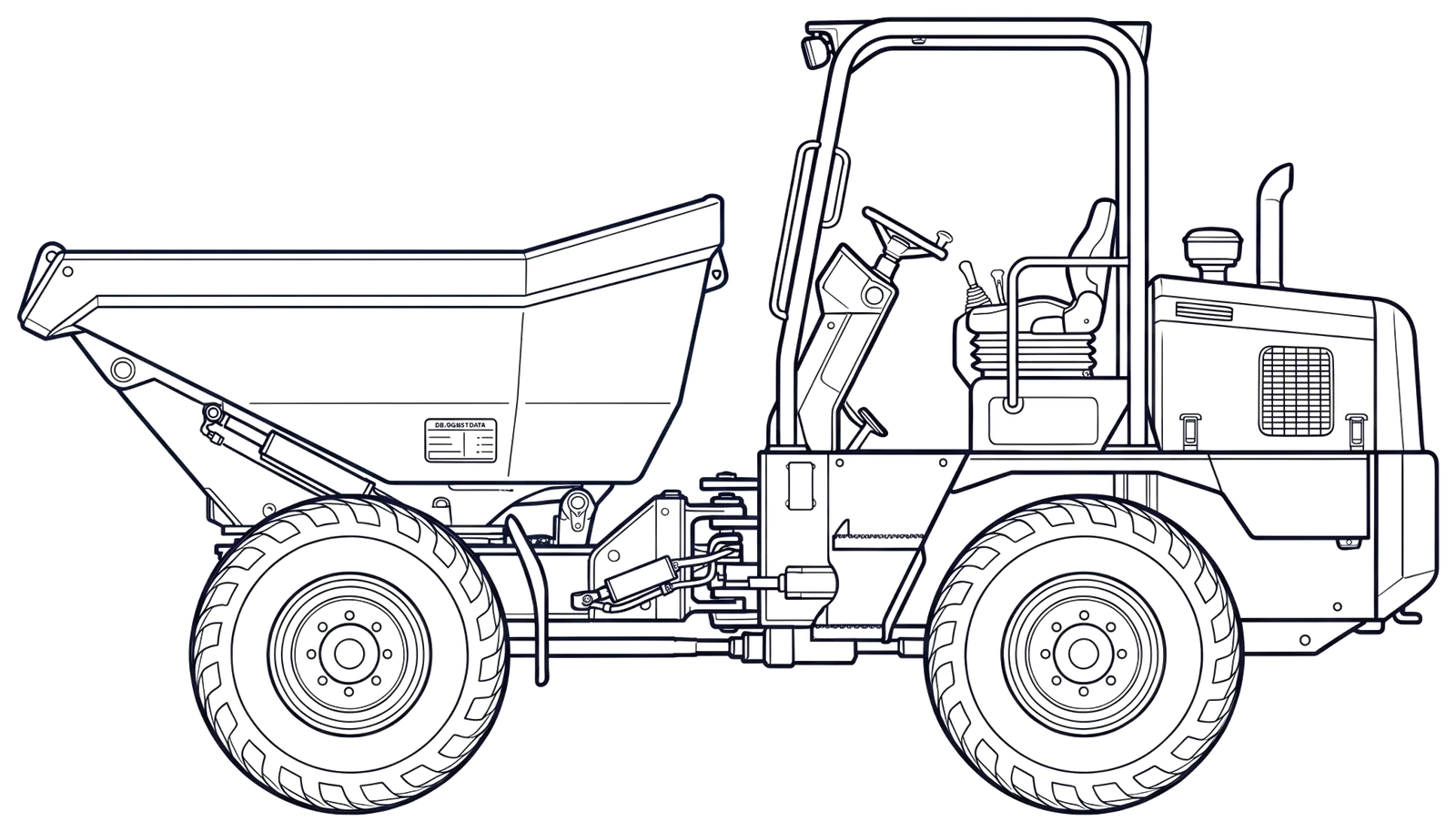
The Wacker Neuson DW20 is a site dumper designed for on-site earthmoving and material transport tasks in the construction and civil-engineering sectors. As a wheeled site dumper, it is built to move bulk materials such as soil, gravel, and spoil across job sites where larger plant cannot easily operate. The machine sits in a well-established equipment category with a broad base of users in groundworks, landscaping, and infrastructure contracting.
Applicazioni tipicheDove viene utilizzata questa macchina
Site dumpers of this class are commonly deployed on residential and commercial groundworks, road and utility trenching projects, and landscaping or land-reclamation schemes. Their compact dimensions relative to articulated trucks make them suitable for restricted urban sites and confined access routes. They are frequently used in conjunction with excavators and compaction equipment as part of a coordinated earthworks fleet.
Ispezione del mercato dell'usatoCosa controllare prima dell'acquisto
When inspecting a used site dumper of this class, buyers should assess the condition of the skip pivot points and tipping ram seals for wear or leakage. The drive axles, differential locks, and brake systems warrant close attention, as these components carry significant operational loads on uneven terrain. Engine hours should be verified against visible wear on controls and the operator platform, and service history documentation should be requested to confirm scheduled maintenance compliance. Hydraulic hoses, the dumping mechanism, and any four-wheel-drive engagement systems should be function-tested under load conditions prior to purchase.
Mercato attualePosizionamento di prezzo
The Wacker Neuson DW20 trades in a European market price band of EUR 30750 to EUR 43019, with an average transaction figure of EUR 37433. Wacker Neuson competes in this site-dumper segment against established manufacturers including Thwaites, Terex Benford, and Yanmar, among others. Buyers can expect pricing to reflect machine age, condition, and hours, with well-maintained examples tending toward the upper portion of the documented range.