Über · Liebherr L538Übersicht
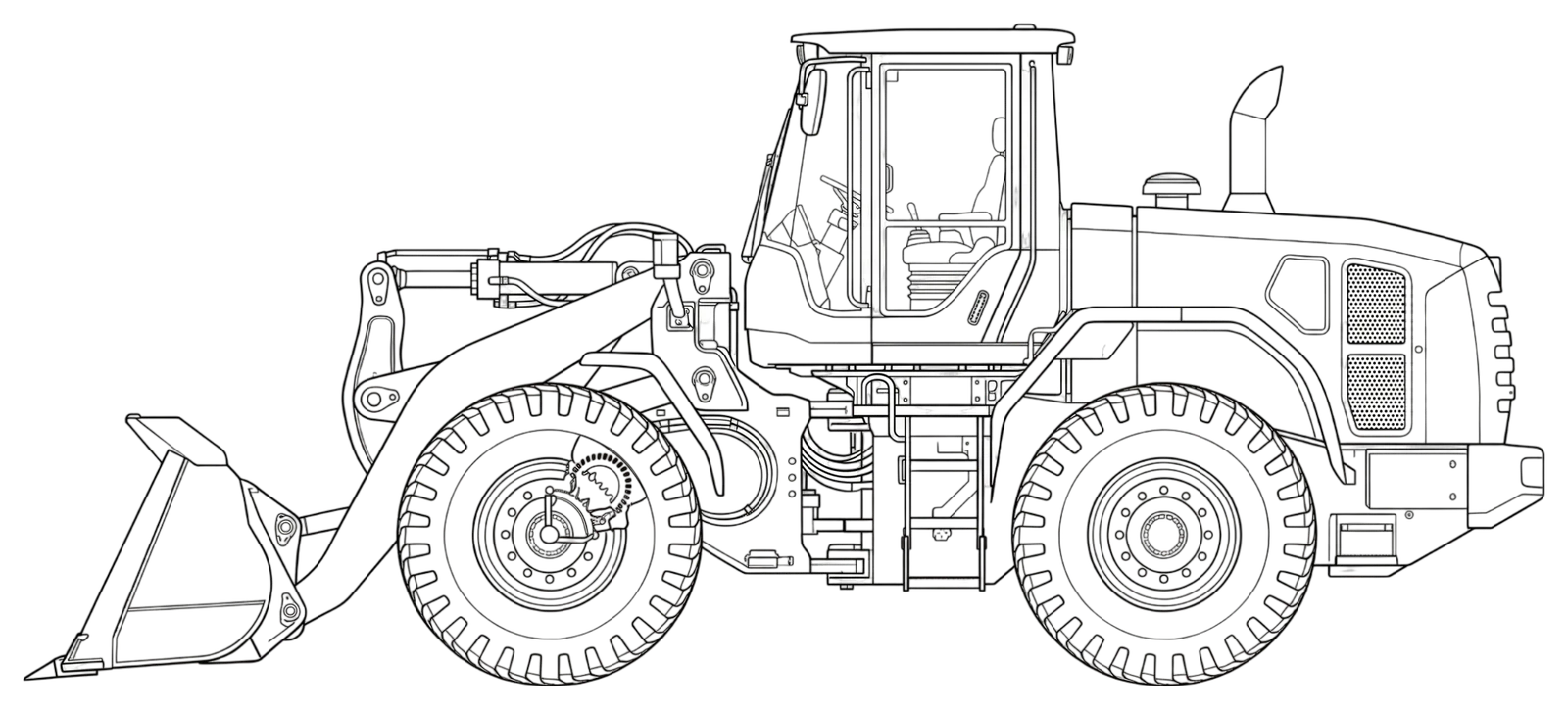
The Liebherr L538 is a mid-range wheel loader with an operating weight of 12,260 kg and an engine output of 154 hp, placing it firmly in the compact-to-medium segment of the wheel loader class. Standard bucket capacity is 2.3 m³, giving the machine a capable material-handling profile for its size category. Production has run continuously from 2000 to the present, meaning a wide spread of build years is available on the used market and parts support is well established across that production span.
Typische AnwendungsbereicheWo diese Maschine eingesetzt wird
Wheel loaders in the L538's weight and capacity class are well suited to aggregate handling, bulk material loading, and stockpile management at quarries, recycling yards, and construction sites. They are also regularly deployed in municipal operations, timber yards, and agricultural settings where a balance of maneuverability and payload capacity is required. The 2.3 m³ bucket capacity positions the machine for efficient truck-loading cycles without the overhead of a larger, heavier unit.
Gebrauchtmarkt-InspektionWas Sie vor dem Kauf beachten sollten
Inspection of a used L538 should prioritize the condition of the articulation joint and steering cylinders, as these are high-stress areas on any wheel loader and repair complexity is significant. The hydraulic system should be checked for leaks at the boom and tilt circuits, and the bucket cutting edge and wear plates should be assessed for remaining service life. Tire condition and matching across axles has a direct bearing on near-term operating costs and should be evaluated carefully. Engine oil consumption, coolant condition, and transmission response across all ranges are standard checks for this class. A complete service history with documented oil and filter changes is the single most reliable indicator of how the machine has been maintained, and its absence should be treated as a risk factor requiring deeper inspection.
Aktueller MarktPreisposition
The L538 competes directly in its segment against the Case 621 and the Hitachi ZW150. Against the Case 621, buyers typically compare powertrain accessibility, dealer network density, and attachment compatibility. Against the Hitachi ZW150, the comparison often centers on hydraulic system architecture and long-term component availability. Within the L538's own price band, the primary value drivers are accumulated service hours, maintenance history, and overall mechanical condition. Configuration also plays a significant role: machines equipped with high-tip buckets, quick-couplers, or ride-control systems command stronger positioning than base-specification units. Documented service records and original factory condition consistently place a machine toward the stronger end of the range, while high hours, wear to the articulation joint, or missing service history move it toward the lower end.