Über · Volvo ECR145Übersicht
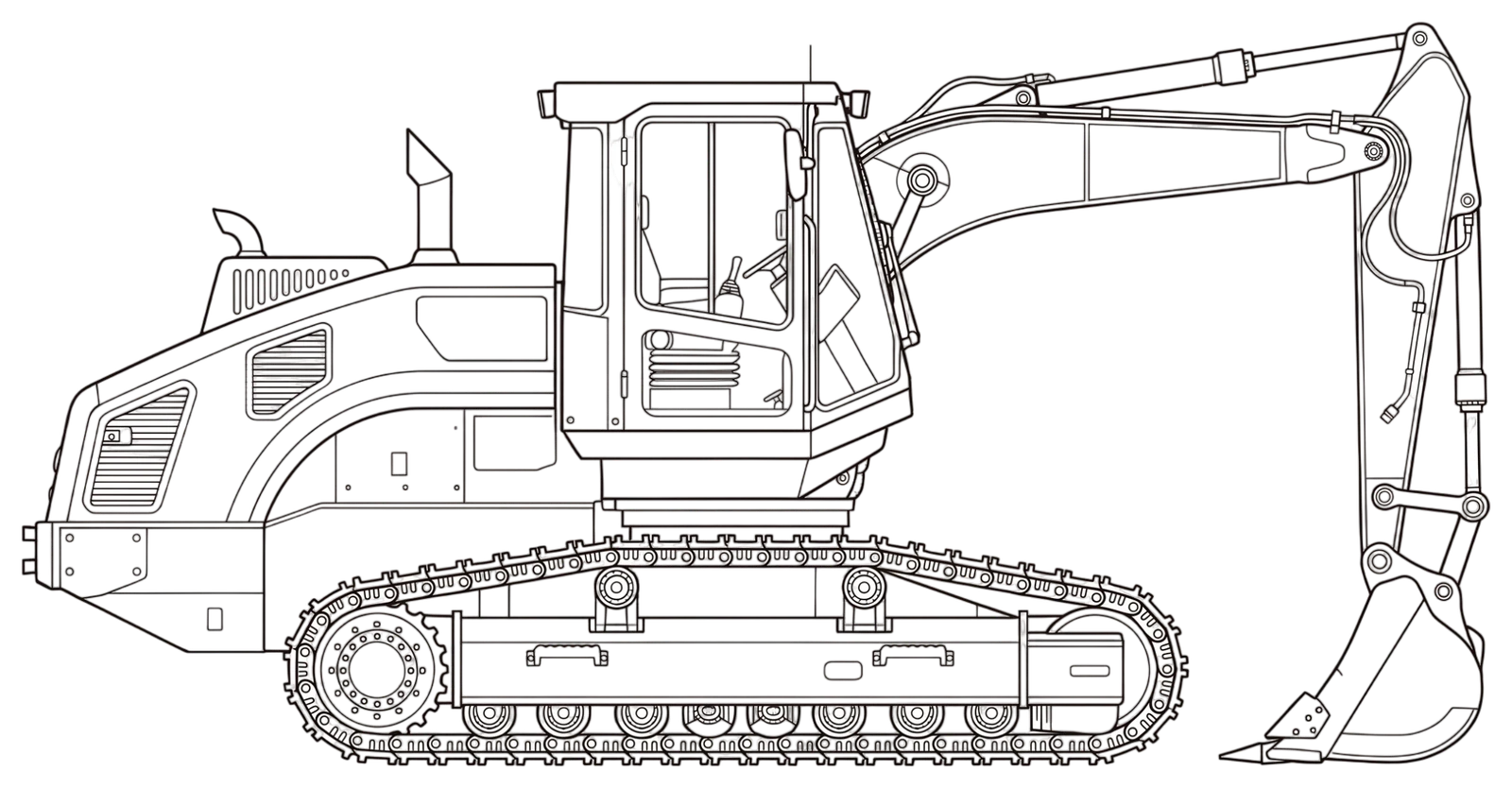
The Volvo ECR145 is a short-radius crawler excavator in the 15-tonne class, offering an operating weight of 15,238 kg and an engine output of 120 hp. Its compact tail-swing design allows it to operate in confined sites where a conventional long-tail machine of equivalent weight would be restricted. With a rated bucket capacity of 0.69 m3, it sits at the productive end of the mid-class segment, balancing digging performance with site accessibility. The ECR145 is a recognised production unit within the Volvo excavator lineup, positioned between compact and full-size mid-range machines.
Typische AnwendungsbereicheWo diese Maschine eingesetzt wird
The 15-tonne short-radius class is well suited to urban construction, road and utility work, and site preparation tasks where working envelopes are tight or access is restricted. The 0.69 m3 bucket capacity supports productive cycle times in foundation digging, trenching, and drainage installation without the logistical overhead of a larger machine. Demolition support, material handling with appropriate attachments, and pipeline work are also consistent applications for this class.
Gebrauchtmarkt-InspektionWas Sie vor dem Kauf beachten sollten
Inspection of any used 15-tonne crawler excavator should begin with the undercarriage, as track components including pads, rollers, idlers, and sprockets are subject to significant wear and represent a meaningful portion of reconditioning expenditure. Buyers should assess slew ring play, which can be checked by attempting to rock the upperstructure against the undercarriage, as excessive movement indicates bearing wear. Hydraulic system integrity warrants careful attention: examine ram seals for weeping, check hose condition throughout the boom, arm, and bucket circuit, and confirm smooth, controlled movement across all functions without drift. Engine condition should be evaluated by checking for smoke at startup and under load, reviewing oil condition, and confirming coolant is clean and free of contamination. On short-radius machines such as the ECR145, the compact tail configuration places additional importance on counterweight and rear-frame inspection for impact damage common in confined-site operation. Availability and currency of service documentation, particularly for major component work, significantly affects both the risk profile and the negotiating position of any transaction.
Aktueller MarktPreisposition
The Volvo ECR145 is routinely cross-shopped against the Hitachi ZX140 and the JCB JS145. Relative to the Hitachi ZX140, the ECR145 carries a higher operating weight at 15,238 kg compared to the ZX140's lighter class positioning, which may favour the Volvo in applications requiring greater digging force and stability. Against the JCB JS145, the ECR145 distinguishes itself through its short-radius configuration, whereas the JS145 is a conventional-tail machine, making the Volvo the preferred choice where site geometry is constrained. Within the used market, the attributes that move any individual unit within its price band include accumulated service hours, maintenance history and documentation, configuration specifics such as blade or offset boom fitment, the presence or absence of additional attachments such as hydraulic quick couplers or hammers, undercarriage condition, and overall cosmetic and structural condition. Machines with verifiable service records and lower hours command a stronger position in the band; high-hour units or those with deferred maintenance trade at the lower end.