Über · Volvo L60Übersicht
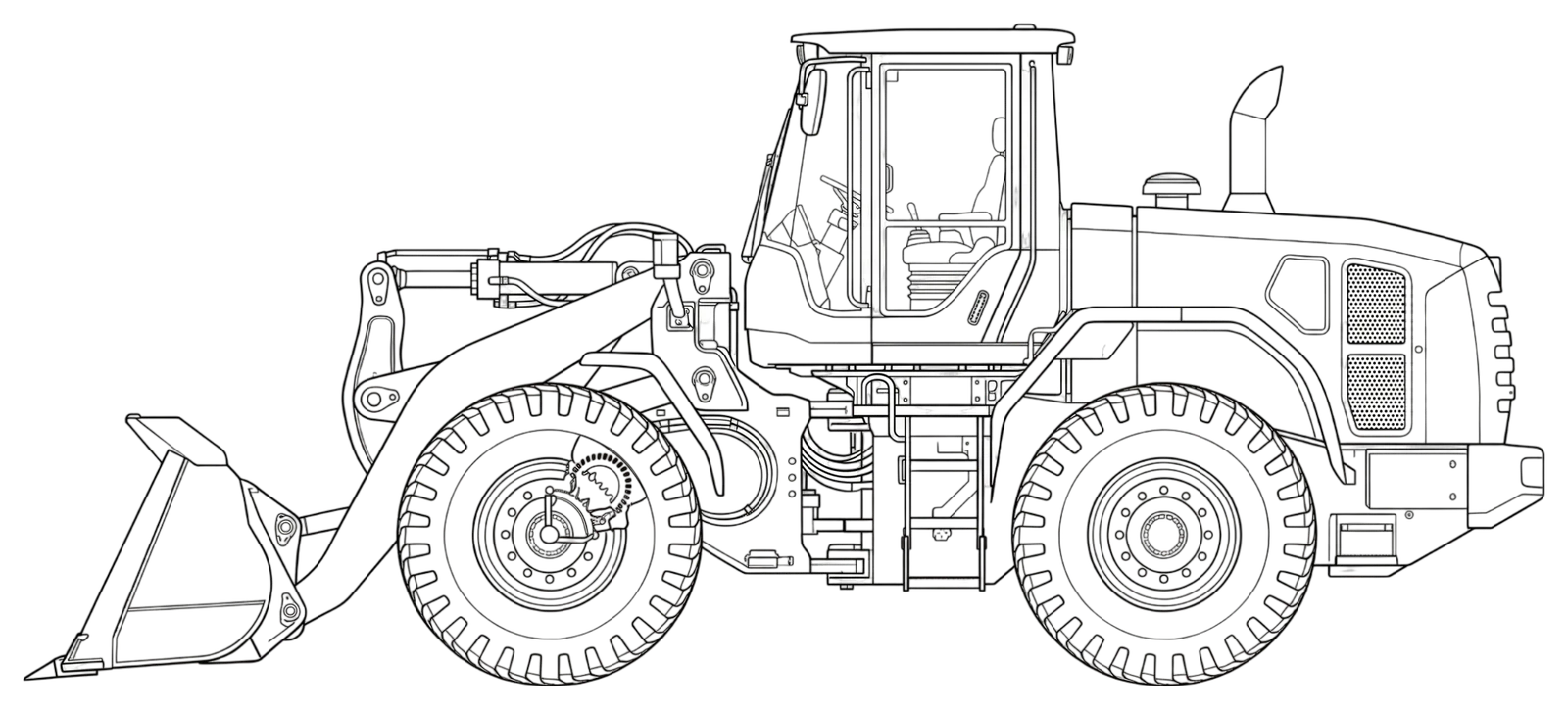
The Volvo L60 is a mid-range articulated wheel loader with an operating weight of 13,600 kg and an engine output of 164 hp. Equipped with a standard bucket capacity of 1.8 m³, it sits in the compact-to-mid segment of the wheel loader market. The model has been in continuous production since 1986, giving it an exceptionally long production run and a well-established parts and service network across multiple generations.
Typische AnwendungsbereicheWo diese Maschine eingesetzt wird
Wheel loaders in this weight and capacity class are suited to general earthmoving, aggregate handling, site preparation, and load-and-carry operations at quarries, construction sites, and industrial yards. The 1.8 m³ bucket capacity makes the L60 well matched to bulk material handling where a larger machine would be oversized and a compact loader would be underpowered. Municipal applications such as snow clearance and yard logistics are also common uses for machines in this class.
Gebrauchtmarkt-InspektionWas Sie vor dem Kauf beachten sollten
Inspection of any used wheel loader in this class should begin with a review of service records to verify maintenance intervals and major component history. The articulation joint and associated seals are a priority check point on any articulated wheel loader, as wear in this area affects both safety and operating precision. Hydraulic system integrity, including cylinder seals and hose condition, should be assessed alongside transmission behaviour during a live operational test. Tyre condition carries significant weight in this class given replacement cost relative to machine value, so tread depth and sidewall integrity warrant close attention. Bucket and cutting-edge wear indicates the intensity of prior use and will influence refurbishment requirements. Where possible, a third-party mechanical inspection is advisable before committing to purchase.
Aktueller MarktPreisposition
The Volvo L60 competes directly with the Caterpillar 930 and the Liebherr L542 in the compact-to-mid wheel loader segment. Against the Caterpillar 930, the L60 offers a comparable power and capacity profile, with purchasing decisions typically driven by brand service network preference and machine configuration. The Liebherr L542 targets a similar operating weight range, and buyers often compare the two on attachment compatibility and drivetrain characteristics. Within the L60's own resale band, the primary attributes that move a unit are recorded service hours, overall mechanical condition, tyre wear, the presence of quick-coupler systems, and the specification of attachments such as forks or high-tip buckets. Machines with full service documentation and original Volvo attachments consistently occupy the stronger end of the value range, while high-hour units or those requiring structural attention sit at the lower end.