Informacje · Caterpillar D6KPrzegląd
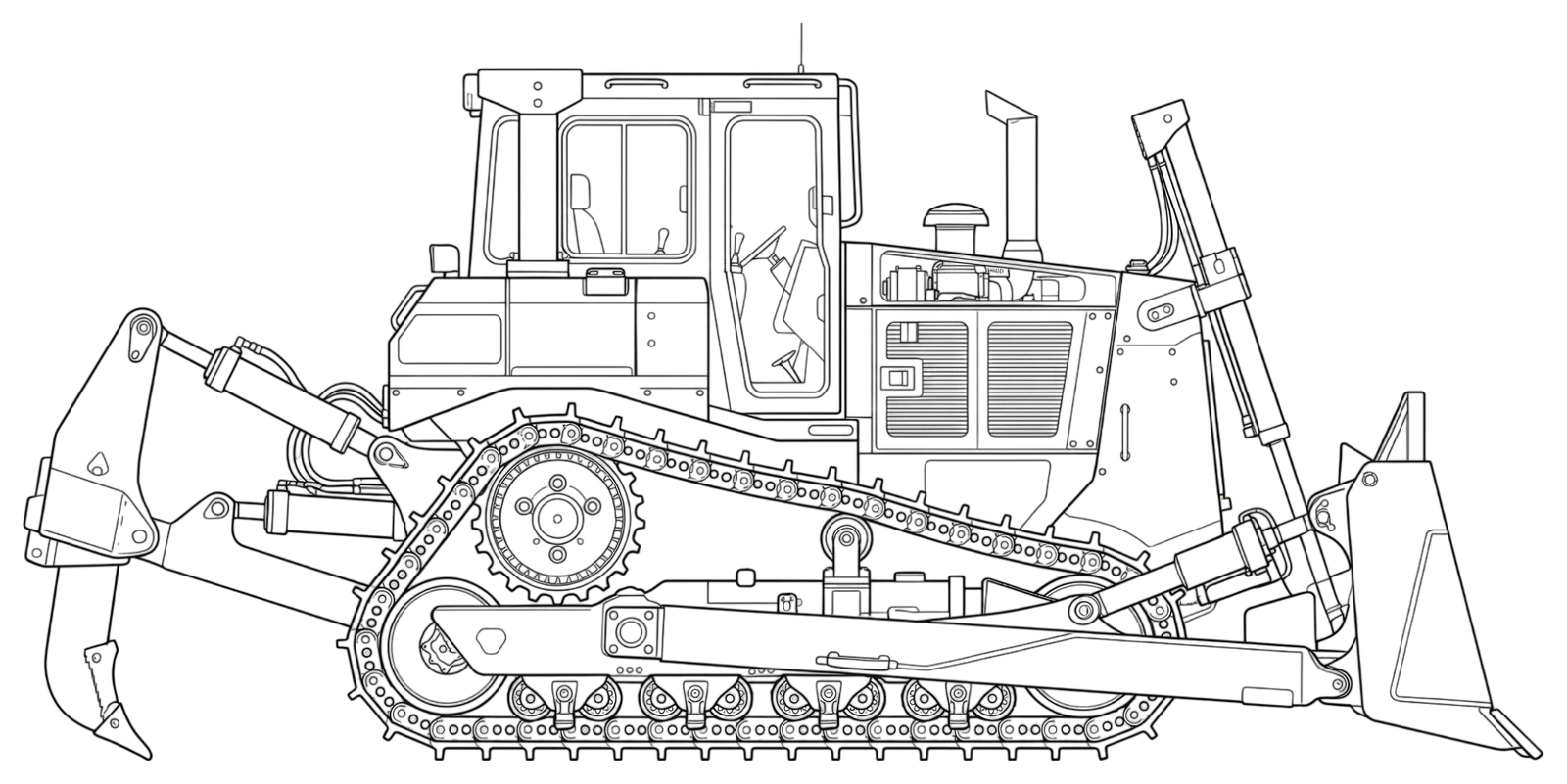
The Caterpillar D6K is a mid-size crawler bulldozer with an operating weight of 13,909 kg and an engine output of 130 hp. It sits in the intermediate dozer segment, positioned above light grading machines and below the heavier D6T-class equipment. The D6K carries a blade capacity of 3.81 m3, giving it practical earthmoving capability suited to a broad range of site conditions.
Typowe zastosowaniaGdzie ta maszyna jest używana
Machines in this weight and power class are commonly deployed on site preparation, road building, land clearing, and general earthmoving contracts where maneuverability and moderate pushing capacity are both required. The D6K is well suited to contractors working on residential and light commercial developments, pipeline corridors, and forestry access tracks. Its size allows productive work in confined areas where larger dozers would be difficult to operate efficiently.
Kontrola rynku wtórnegoCo sprawdzić przed zakupem
When inspecting a used D6K or comparable machine in this class, undercarriage condition deserves priority attention, as track components represent a significant portion of reconditioning expense and wear is not always visible from a distance. Buyers should assess sprocket, idler, and link wear directly and request wear measurement records where available. Engine oil analysis history, hydraulic system function across the full blade range, and final drive seal condition are all worth verifying before purchase. Machines that have worked in abrasive or rocky material typically show accelerated undercarriage wear relative to hours logged. Confirm that the blade, push arms, and any ripper attachment are free of cracks and that tilt and pitch cylinder seals are serviceable. A full service history with dealer or workshop records substantially reduces uncertainty about the machine's maintenance standard.
Obecna sytuacja rynkowaPozycja cenowa
The D6K competes directly with the John Deere 700K and the Case 1150 in the mid-size crawler dozer segment. Compared to the John Deere 700K, buyers evaluate differences in dealer support networks, undercarriage component availability, and operator cab ergonomics. Against the Case 1150, the D6K is cross-shopped on blade configuration options and long-term parts sourcing. Within this class, machine hours, undercarriage wear condition, blade type, track configuration, and the presence of additional attachments such as rippers are the primary attributes that move a unit within its price band. Machines with documented service histories and lower accumulated hours command stronger positioning, while high-hour examples with worn undercarriage components sit at the lower end of the range regardless of general cosmetic condition.