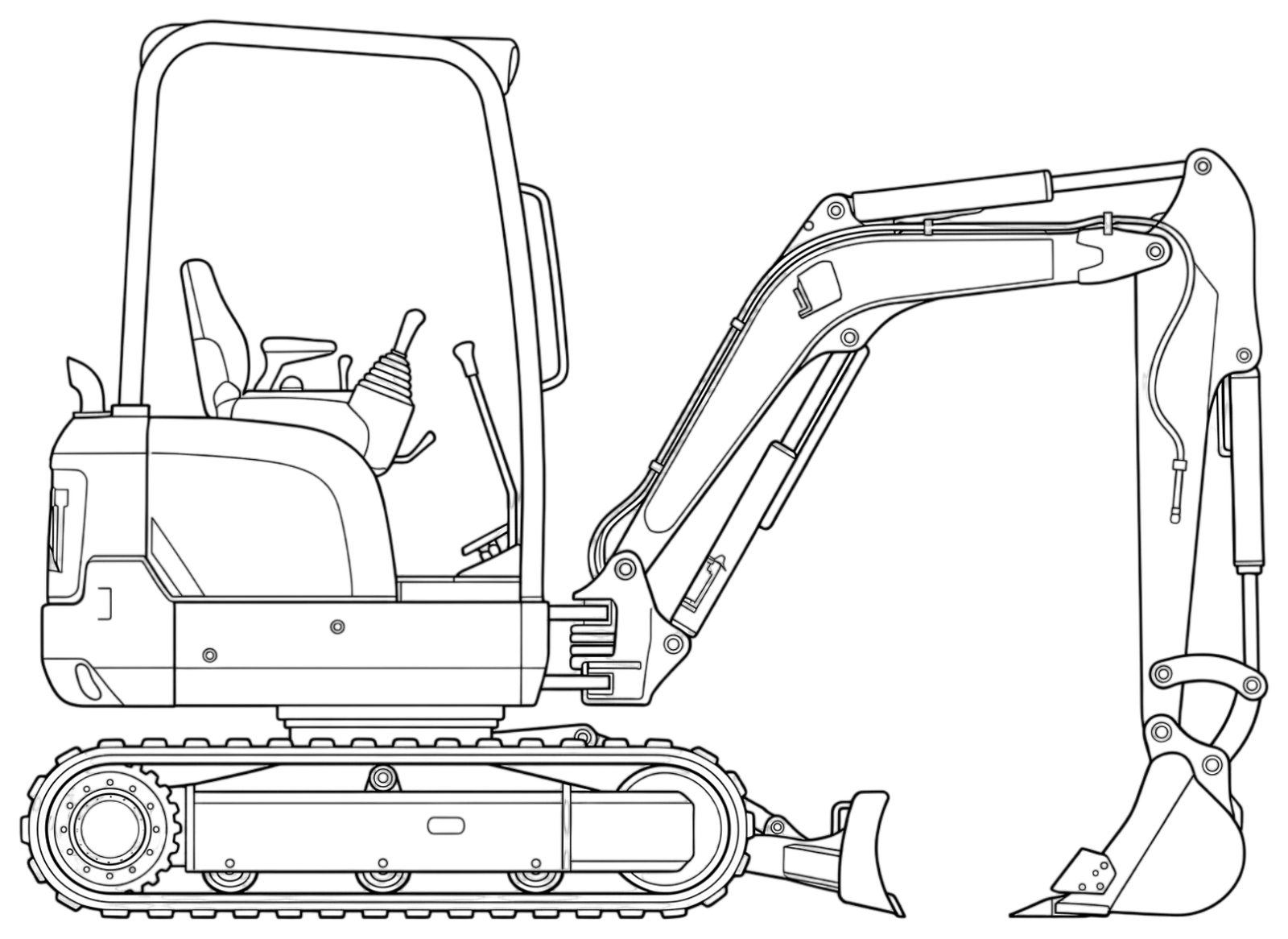
About · Bobcat E20Overview
The Bobcat E20 is a compact mini-excavator in the sub-2-tonne class, with an operating weight of 1953 kg and an engine output of 14 hp. It belongs to a segment designed to balance digging capability with strict size and weight constraints, making it one of the lighter machines in the mini-excavator category. Its proportions reflect a deliberate engineering focus on site access and transport ease without sacrificing basic hydraulic performance.
Typical applicationsWhere this machine is used
Machines in this weight class are routinely deployed on urban utility work, landscaping, and residential construction where site access is restricted and ground-bearing pressure must be kept low. Confined trenching, drainage installation, and foundation preparation in tight courtyards or alongside existing structures are characteristic uses. The category also serves hire fleets targeting customers who need occasional digging capacity without committing to a larger, heavier machine.
Used-market inspectionWhat to check before buying
Inspection of any sub-2-tonne mini-excavator should begin with the undercarriage, as rubber tracks, rollers, and sprockets represent a meaningful share of ownership cost in this class. Check track tension and look for uneven wear patterns that may indicate alignment or frame issues. Hydraulic hoses, cylinder seals, and quick-coupler interfaces warrant close attention, particularly on machines that have seen attachment-intensive work. Verify that all auxiliary hydraulic circuits function correctly and that no warning codes are active on the instrument panel. Service records should be requested and cross-referenced with visible wear indicators. Where records are absent, a pre-purchase inspection by a qualified mechanic familiar with compact excavators is advisable before committing to the transaction.
Current marketPrice position
The Bobcat E20 competes directly with the JCB 19C-1 and the Volvo EC20 in the sub-2-tonne mini-excavator segment. Against the JCB 19C-1, buyers typically evaluate differences in boom geometry, cab ergonomics, and dealer network coverage. Against the Volvo EC20, brand positioning and hydraulic flow characteristics are common discussion points. Within the E20's own price band, the principal attributes that move a unit are recorded operating hours, the presence or absence of a quick-coupler, the attachment inventory included in the sale, overall mechanical condition, and whether the machine has been maintained under a documented service schedule. Machines with lower hours, a full complement of buckets, and verifiable service history consistently occupy the stronger end of the range, while high-hour units or those showing wear to undercarriage components sit at the lower end.