About · JCB 437Overview
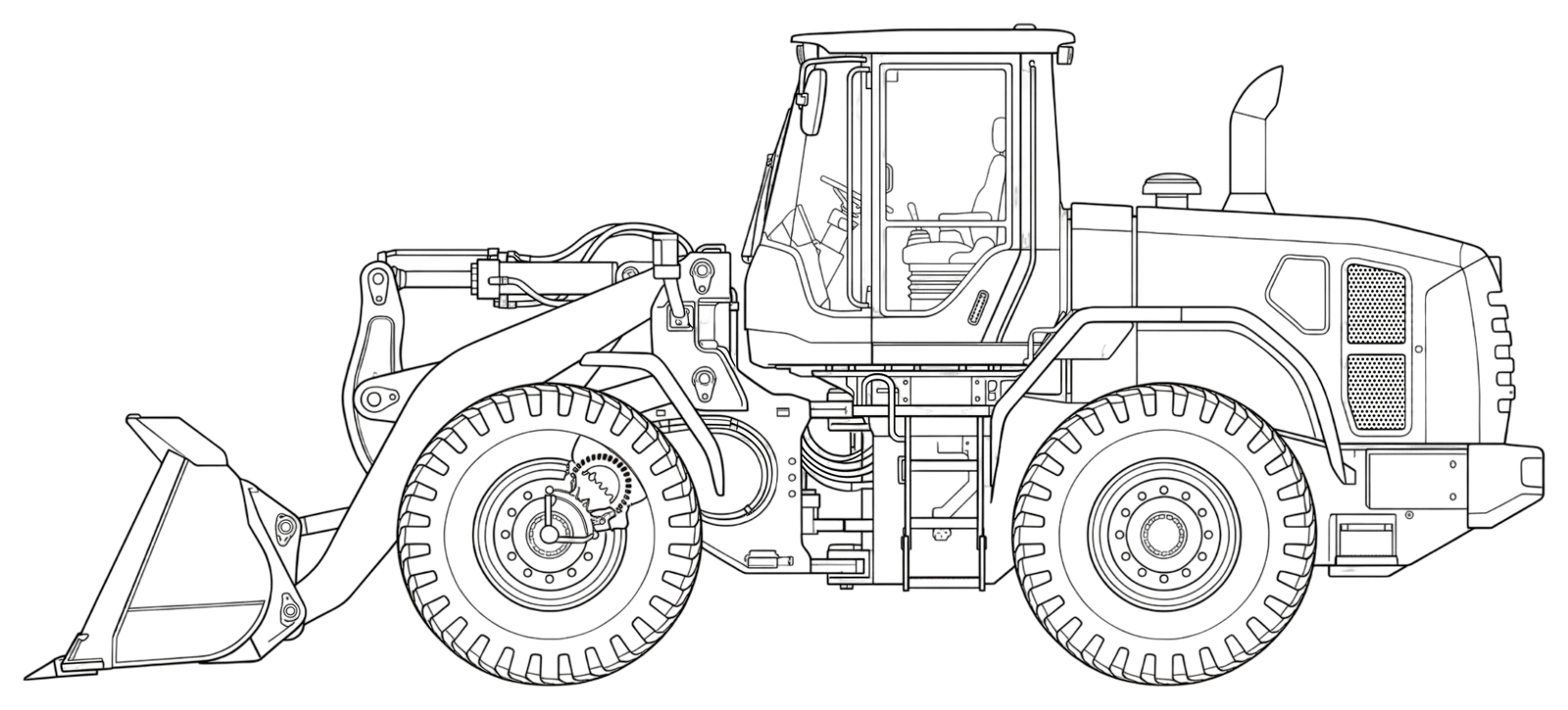
The JCB 437 is a large wheeled loader positioned in the upper-mid capacity segment of the wheeled loader class. It is built around a turbocharged diesel engine and delivers substantial bucket capacity suited to high-throughput loading cycles. The machine sits above compact utility loaders in the JCB range and competes directly with full-size production loaders from the major European and North American manufacturers.
Typical applicationsWhere this machine is used
Wheeled loaders of this class are deployed in quarrying, bulk aggregate handling, port and logistics yards, large-scale construction earthworks, and industrial waste and recycling operations. Their combination of breakout force, travel speed, and articulated steering makes them effective in high-cycle loading of trucks and hoppers. Agricultural applications including silage and grain handling also represent a significant share of working hours for machines in this segment.
Used-market inspectionWhat to check before buying
Before committing to a JCB 437, inspect the articulation joint and steering cylinders for play, seal condition, and any signs of chronic weeping. Check the axles and differential breathers, as wheeled loaders in heavy-duty applications accumulate axle wear that is not always reflected in the hour meter reading. Examine tyre sidewalls, bead areas, and tread depth carefully, since replacement is a significant ownership cost in this class. Review the transmission for smooth progression through all ranges and listen for abnormal noise under load. Confirm that the boom pivot pins and bucket linkage show no excessive movement, and request full service records to verify oil-change intervals and any component replacements. Cab condition, including the condition of the HVAC system and visibility aids, affects both operator productivity and residual value, so a thorough cab inspection is worthwhile.
Current marketPrice position
The JCB 437 is cross-shopped against comparable-capacity models from Volvo, Caterpillar, Komatsu, and Liebherr. Relative to these competitors it is frequently noted for its operator environment and serviceability layout, while buyers evaluating Volvo or Caterpillar equivalents often compare cycle times and drivetrain configuration preferences. Within the 437's own price band, the primary attributes that move a unit higher or lower are accumulated working hours, full service history documentation, tyre condition and remaining tread life, the presence of a quick-coupler system, and the specification of attachments such as high-tip or multi-purpose buckets. Machines with a single careful owner and verifiable dealer servicing sit above those with incomplete records, and configuration details such as ride-control, weighing systems, and air-conditioned cab condition all influence where an individual unit lands relative to the class average.