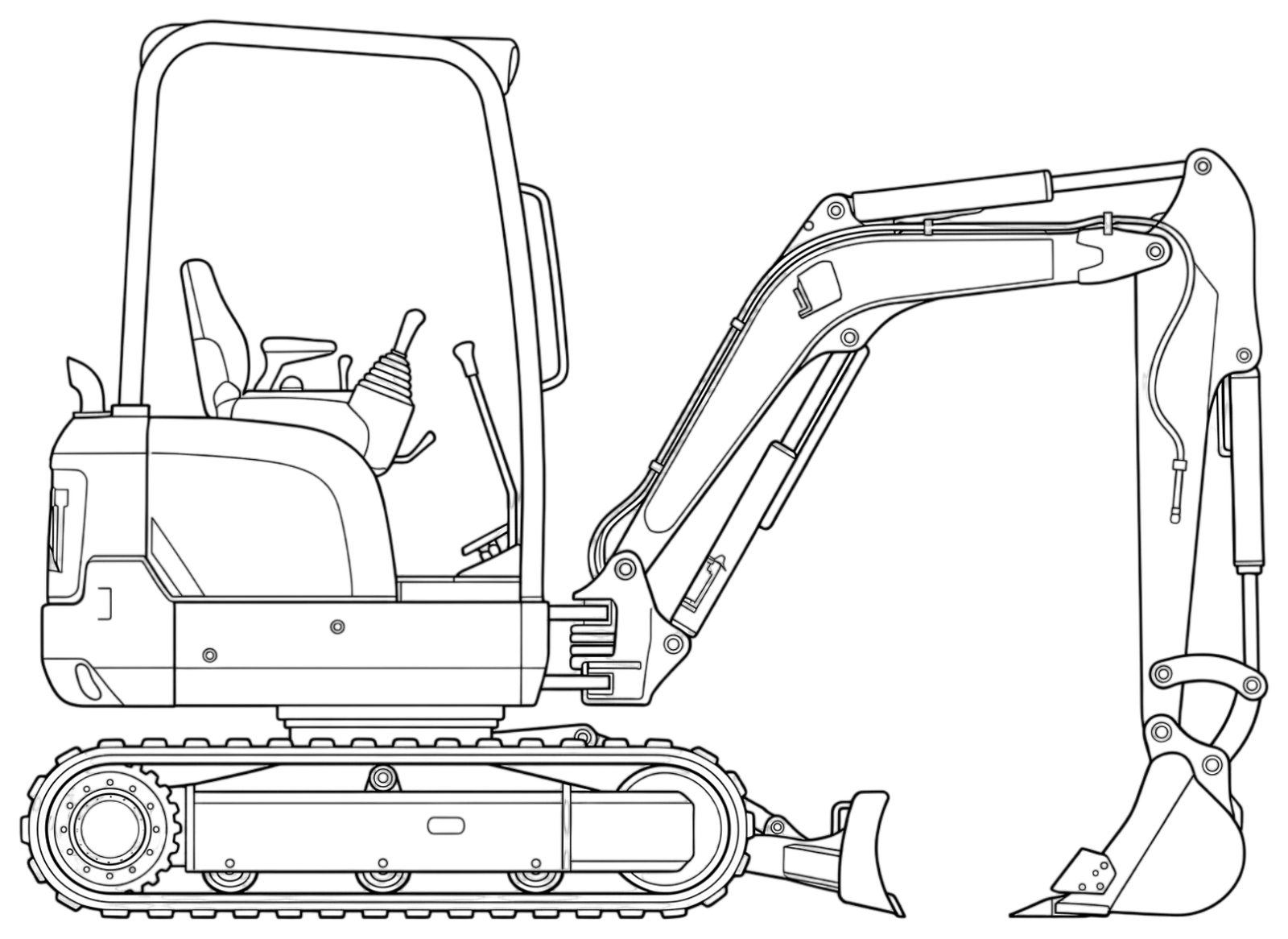
About · JCB 8080Overview
The JCB 8080 is an 8,250 kg mini-excavator producing 59 hp, positioned at the upper end of the compact excavator segment where machines transition from true mini class into conventional midi territory. Its 0.28 m3 bucket capacity places it in a productive working range suited to heavier compact applications. As a JCB product it benefits from the manufacturer's established dealer and parts network across European and global markets.
Typical applicationsWhere this machine is used
Machines of this class are typically deployed on urban construction sites, utility and pipeline work, road maintenance, and landscaping projects where ground disturbance must be controlled and site access is restricted. The 8-tonne weight bracket also suits foundation work for residential and light commercial builds, as well as land clearing and drainage schemes where a larger machine would cause unacceptable compaction or access difficulties. Rental fleets commonly include this size category given its versatility across groundworks disciplines.
Used-market inspectionWhat to check before buying
Inspection of any upper 8-tonne class mini-excavator should begin with the undercarriage, as track components, rollers, and final drives represent a significant portion of ownership cost at this weight. Slew ring play and slew motor condition warrant close attention given the working loads typical of this class. Hydraulic hoses, cylinder seals, and quick-hitch wear should be assessed before purchase, particularly on machines used with rotating or hydraulic-powered attachments. Engine service intervals and fluid change documentation should be requested and verified. Cabin integrity, including ROPS/FOPS certification status and climate control function, is relevant both for operator regulation compliance and residual value. Where the machine has been used with a hydraulic thumb, breaker, or other auxiliary tool, the auxiliary hydraulic circuit and control valve condition merit specific inspection.
Current marketPrice position
Within the 8-tonne compact excavator segment the JCB 8080 is cross-shopped primarily against the Doosan DX85 and the Yanmar VIO80. The Doosan DX85 sits slightly above the 8080 in rated operating weight, which can be a deciding factor on sites with ground-bearing or transport constraints. The Yanmar VIO80 competes closely on weight class and is a zero-tail-swing configuration, a layout that some buyers prioritise for confined urban work, making it a meaningful specification point of comparison when evaluating the conventional-swing JCB against it. Within the 8080's own traded population, the attributes that move a unit within its price band are accumulated service hours, the presence and condition of a quick-hitch system, the range of auxiliary attachments included, undercarriage wear, cabin specification including air conditioning, and overall documented service history. Machines with verified low hours, full service records, and a complementary attachment package command stronger positioning than high-hour units offered without documentation.