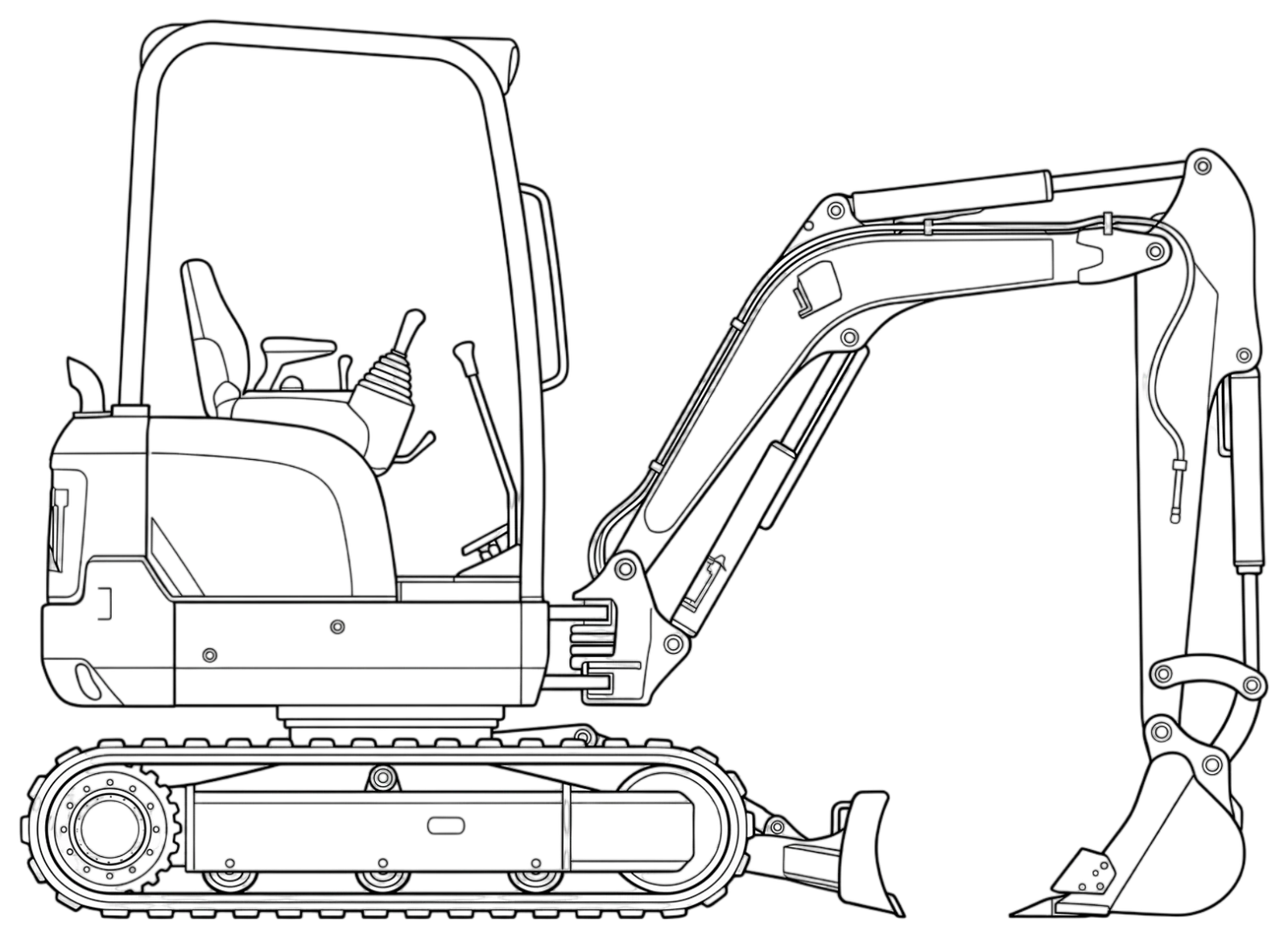
About · JCB 86C-2Overview
The JCB 86C-2 is an 8-tonne-class conventional-tail-swing mini-excavator designed for productive digging in environments where maximum reach and breakout force take priority over confined-space access. Its conventional slew configuration places it in the upper tier of the mini-excavator segment, bridging the gap between compact reduced-tail-swing machines and full-sized crawler excavators. The 86C-2 is built around JCB's established undercarriage and boom geometry for this weight class, offering stability and dig depth suited to heavier earthworks tasks.
Typical applicationsWhere this machine is used
The 86C-2 is well suited to foundation excavation, drainage installation, and bulk earthmoving on open or semi-open sites where tail-swing clearance is not the primary constraint. Its 8-tonne operating weight provides the ballast and reach required for trench work, landscaping cut-and-fill operations, and general civil groundworks. Contractors also deploy machines of this class for demolition assistance and material handling when paired with appropriate hydraulic attachments.
Used-market inspectionWhat to check before buying
Inspecting an 86C-2 should begin with the undercarriage: measure track pad thickness, check sprocket and idler wear, and assess roller seal integrity, as undercarriage refurbishment represents a significant cost on any machine of this class. Examine the boom, dipper, and bucket pivot pins and bushings for play, and confirm that hydraulic cylinders show no seeping seals or scored chrome. Verify that the cab hour meter reading is consistent with the physical wear evident on pedals, seat, and control levers. Request or inspect any available service records to confirm oil and filter change intervals have been observed. Test all auxiliary hydraulic circuits if a quick-coupler or breaker bracket is fitted, and confirm flow and pressure are within specification. Check that the slew ring rotates smoothly under load without audible rumble, and inspect the engine bay for coolant or oil leaks before any test cycle.
Current marketPrice position
In the 8-tonne conventional-tail-swing mini-excavator class, the JCB 86C-2 is routinely cross-shopped against the Volvo ECR88D and EC80D, the Hitachi ZX85USB-6, the Kubota KX080-4, and the Caterpillar 308. Compared with reduced-tail-swing variants in this weight bracket, the 86C-2 typically offers greater counterweight stability and digging performance at the expense of slew clearance in tight corridors. Within its own resale band, the attributes that move a unit toward the stronger end of the range are low recorded hours, full-length rubber track condition, the presence of a hydraulic quick-coupler and auxiliary lines, factory cab specification with air conditioning, and documented service history. Machines at the weaker end of the band typically present high hours, worn undercarriage components, absent or non-original attachments, and incomplete maintenance records. Brand perception for parts availability and dealer network coverage also influences where buyers position the JCB nameplate relative to Japanese-origin competitors in certain markets.