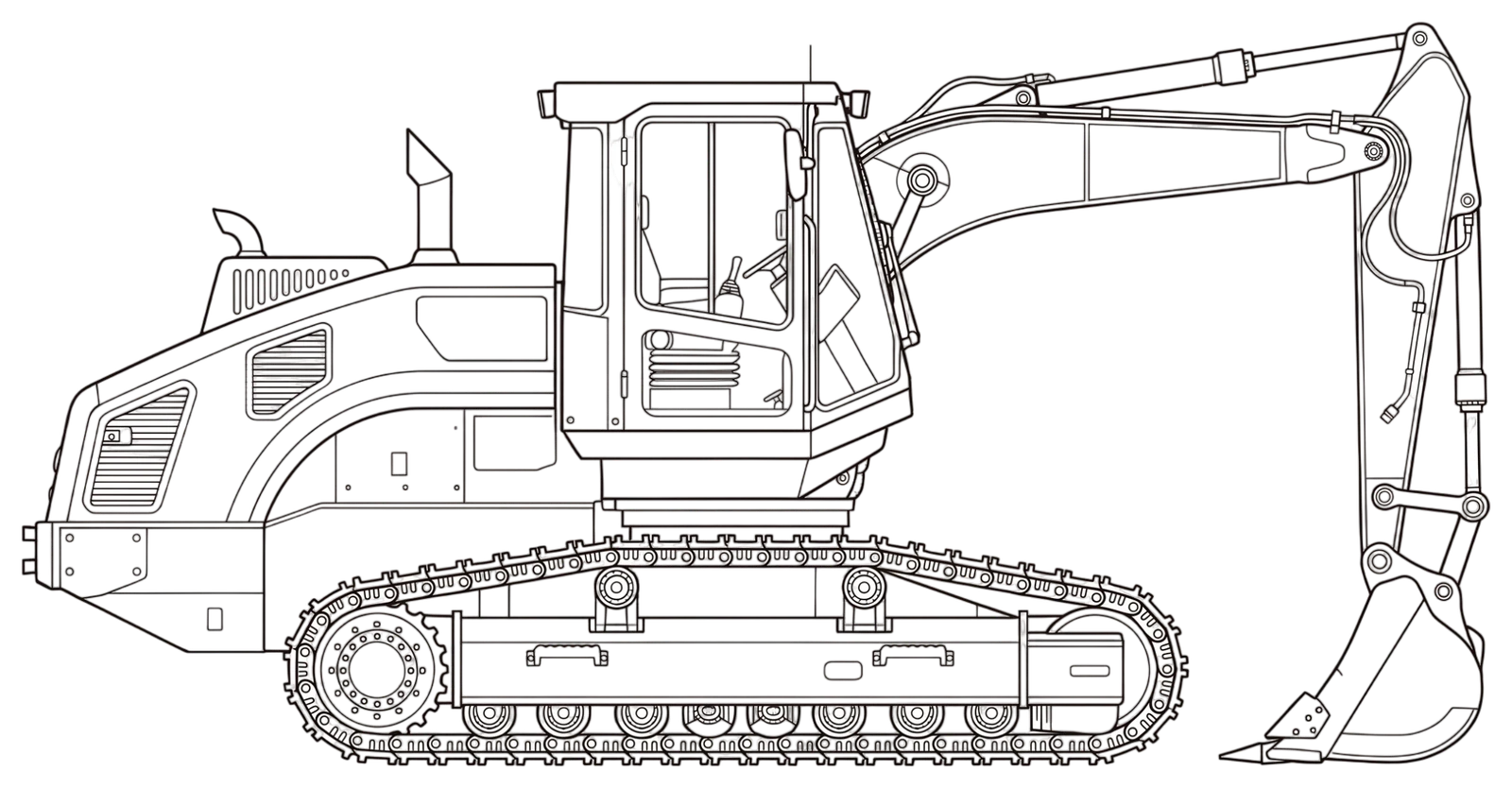
About · JCB JS160Overview
The JCB JS160 is a crawler excavator in the 16-tonne operating weight class, positioned in the mid-range of the hydraulic excavator segment. It is designed and built to JCB's established engineering standards and competes directly with comparable tonnage machines from the major global manufacturers. As a 16-tonne machine, it occupies a versatile point in the excavator lineup, bridging the gap between compact mid-range and heavier duty equipment.
Typical applicationsWhere this machine is used
Machines in the 16-tonne excavator class are well suited to general civil engineering, road construction, pipeline laying, and site preparation work. They are commonly deployed on earthmoving contracts where a tracked, full-house excavator is required but where site access or project scope does not demand a larger machine. Utility infrastructure, drainage schemes, and foundation excavation are among the most frequent applications for this class.
Used-market inspectionWhat to check before buying
When inspecting a JS160 or any machine of this class, buyers should prioritise a full hydraulic function check across all circuits, including auxiliary lines if fitted. The undercarriage, comprising tracks, rollers, idlers, and sprockets, represents a significant cost centre and should be assessed for wear percentage remaining. Slew ring play and bearing condition merit close attention on any used crawler excavator, as does the condition of boom, dipper, and bucket pins and bushes. Cab condition, including seat, controls, and visibility, should be evaluated alongside any fitted monitoring or telematics systems. A documented service history aligned to the manufacturer's recommended intervals adds material confidence to any purchase, and a pre-purchase inspection by an independent engineer is advisable for high-value transactions in this class.
Current marketPrice position
The JCB JS160 is cross-shopped most frequently against comparable 16-tonne class machines from Caterpillar, Komatsu, Volvo, and Hitachi, all of which occupy similar positions in the mid-range crawler excavator segment. Within its class, the JS160 differentiates itself through JCB's proprietary drivetrain and hydraulic system design. Within the price band for any individual example, the primary attributes that move a machine higher or lower are operating hours accumulated, overall mechanical and structural condition, cab specification, the presence or absence of a quick-hitch system, the range of attachments included with the sale, service history documentation, and whether the machine has been reconfigured for specialist applications such as demolition or sorting work. A machine presenting with low hours, full service records, and a comprehensive attachment package will command a position above the class average, while high-hour examples or those showing deferred maintenance will sit below market.