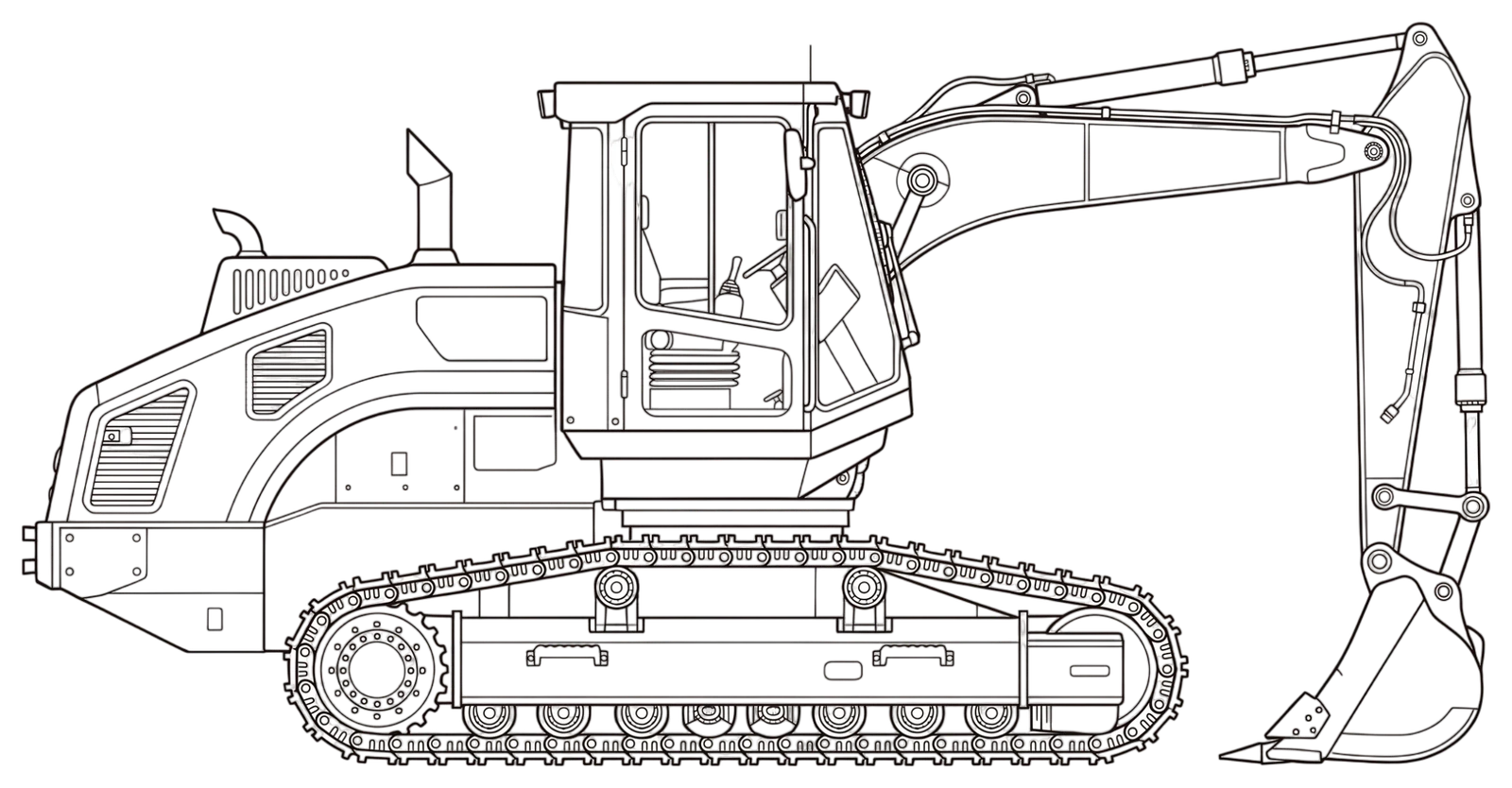
About · Komatsu PC360Overview
The Komatsu PC360 is a large crawler excavator in the 35-tonne operating class, produced continuously since 2003 and representing one of Komatsu's core heavy-duty lines. It delivers 257 hp of engine power combined with a 1.98 m3 bucket capacity, positioning it firmly in the upper-mid range of the crawler excavator segment. This combination of mass, power, and bucket volume makes it a production-oriented machine suited to high-volume earthmoving and heavy construction cycles.
Typical applicationsWhere this machine is used
Machines in this weight and bucket class are commonly deployed on large-scale earthmoving, road construction, dam and embankment work, quarry stripping, and heavy civil infrastructure projects. The 35-tonne operating weight provides the ground bearing and counterbalance necessary for deep-dig and high-reach configurations, while the 1.98 m3 bucket supports efficient truck-loading cycles on major cut-and-fill operations. Demolition and heavy material handling are also documented applications for this size class when appropriately equipped.
Used-market inspectionWhat to check before buying
Before purchasing a used PC360 or any machine in this class, commission an independent inspection that covers undercarriage wear percentage, as track components represent a significant replacement cost on a 35-tonne machine. Verify that the machine's recorded hours are consistent with engine hours logged in any available service records, and request documentation of scheduled oil and filter changes. Inspect the boom, arm, and bucket pins and bushings for play, and check the hydraulic cylinders for seal condition and chrome rod integrity. Review the machine's configuration carefully, noting whether it carries standard or specialist attachments, as these affect both utility and residual value. For machines produced in earlier years of the 2003-to-present production run, place additional emphasis on structural crack inspection at high-stress weld zones around the main frame and swing bearing condition. Confirm parts and service support through a Komatsu dealer network in your operating region before committing to a unit sourced from outside that network.
Current marketPrice position
The PC360 competes directly with the Kobelco SK350 and the Liebherr R934 in the 35-tonne crawler excavator segment. Against the Kobelco SK350, the PC360 carries a higher rated operating weight at 35,900 kg and higher engine output at 257 hp, which typically translates to greater raw digging force and stability under load. The Liebherr R934 represents a European-engineered alternative with a strong reputation for precision and operator comfort, and buyers cross-shopping that model often weigh country-of-origin support networks and parts availability alongside raw specifications. Within the PC360's own traded population, the principal attributes that move a unit within its price band are recorded service hours, maintenance history, undercarriage condition, whether the machine is equipped with a quick coupler or auxiliary hydraulics, attachment inventory, and overall structural condition including boom and arm wear. Configuration variants such as long-reach booms or demolition setups also influence positioning, as does regional availability of Komatsu dealer support.