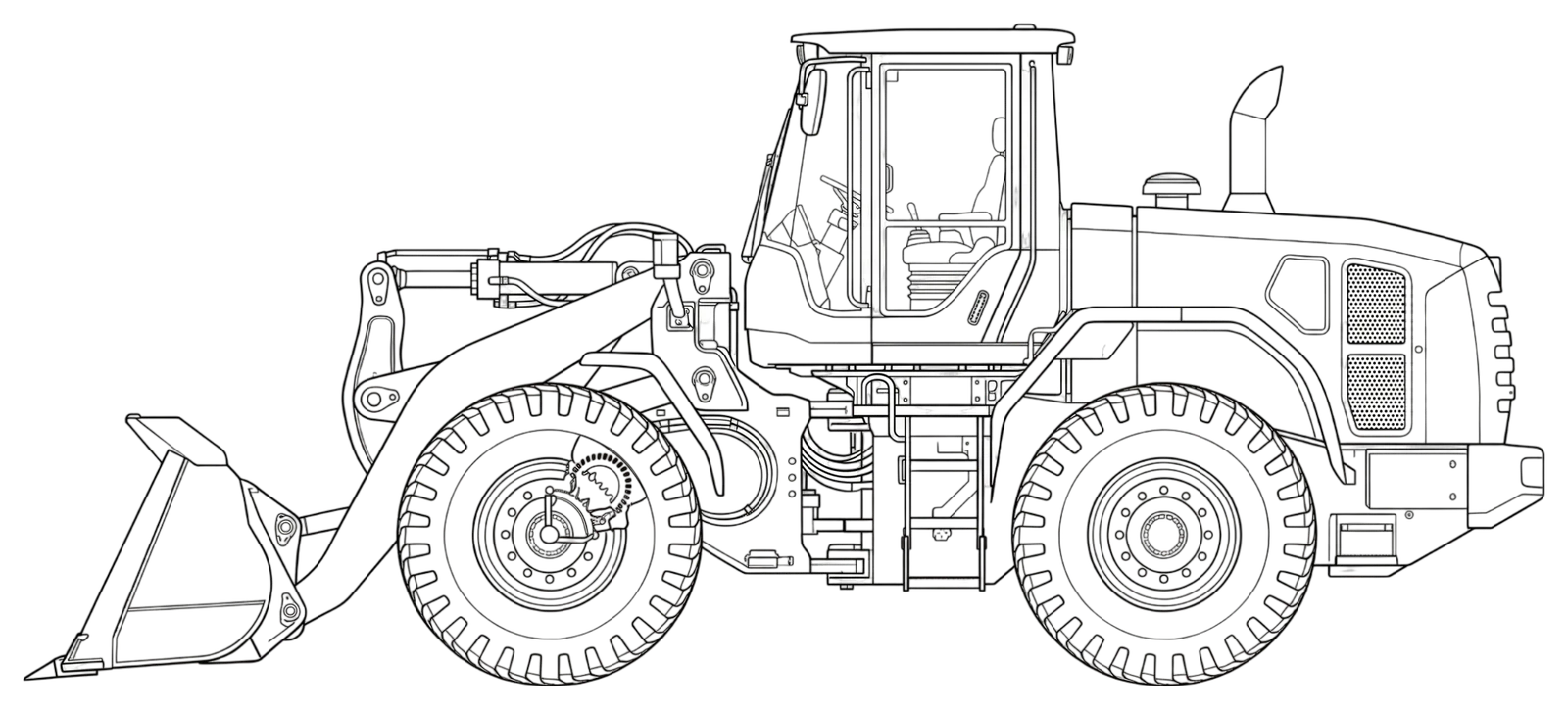
About · Komatsu WA200Overview
The Komatsu WA200 is a mid-size wheel loader in the 10,500 kg operating weight class, producing 125 hp and equipped with a 2.1 m³ bucket capacity. It sits in a segment that balances payload capability with site maneuverability, making it a widely deployed machine across general earthmoving and material-handling operations. Komatsu positions the WA200 as a durable, service-accessible unit consistent with the manufacturer's broader reputation for powertrain longevity and parts availability.
Typical applicationsWhere this machine is used
Machines in this class are typically deployed in aggregate yards, quarry support roles, municipal waste and recycling facilities, construction site material handling, and light-to-medium stockpile work. The 2.1 m³ bucket capacity suits bulk loose-material loading into trucks or hoppers where cycle efficiency matters but a full heavy-production loader would be oversized. Port and industrial yard operations also regularly rely on this weight class for versatility across shift-intensive schedules.
Used-market inspectionWhat to check before buying
Inspection of a used WA200 or any machine in this class should begin with a thorough check of the articulation joint and frame for cracks, weld repairs, or abnormal wear, as these are structural cost drivers in any wheel loader. Hydraulic cylinders should be examined for seal leaks and chrome rod scoring, and the lift and tilt linkage pins checked for play. Powertrain inspection should cover transmission clutch engagement smoothness across all ranges and axle differential breather conditions as indicators of maintenance discipline. Tire assessment is particularly important in this class given the direct influence on operating cost; measure tread depth on all four corners and inspect sidewalls for cuts or bead damage. Request all available service records, confirm that the machine's hours align with physical wear indicators on pedals, seat, and controls, and if possible conduct a loaded cycle test to verify lift force, hydraulic speed, and transmission shift quality under realistic conditions.
Current marketPrice position
The WA200 competes directly with the Hyundai HL730 and the Case 521, all three occupying the same mid-size wheel-loader band. Against the Hyundai HL730, the WA200 offers comparable operating weight and power, with buyers typically differentiating on dealer service network density and parts lead times rather than outright specification gaps. The Case 521 is similarly matched on bucket capacity, and cross-shop decisions often reflect fleet standardization preferences or regional support infrastructure. Within this competitive set, the attributes that move a specific machine within its price band are accumulated hours, service history documentation, tire condition and remaining tread depth, the presence of quick-coupler or auxiliary hydraulic configurations, and overall structural condition of the boom, frame, and cab. Machines with a full attachment complement, recent scheduled maintenance records, and lower hours command stronger positions; high-hour units with deferred maintenance or worn ground-engaging tools sit at the lower end of the band regardless of brand.