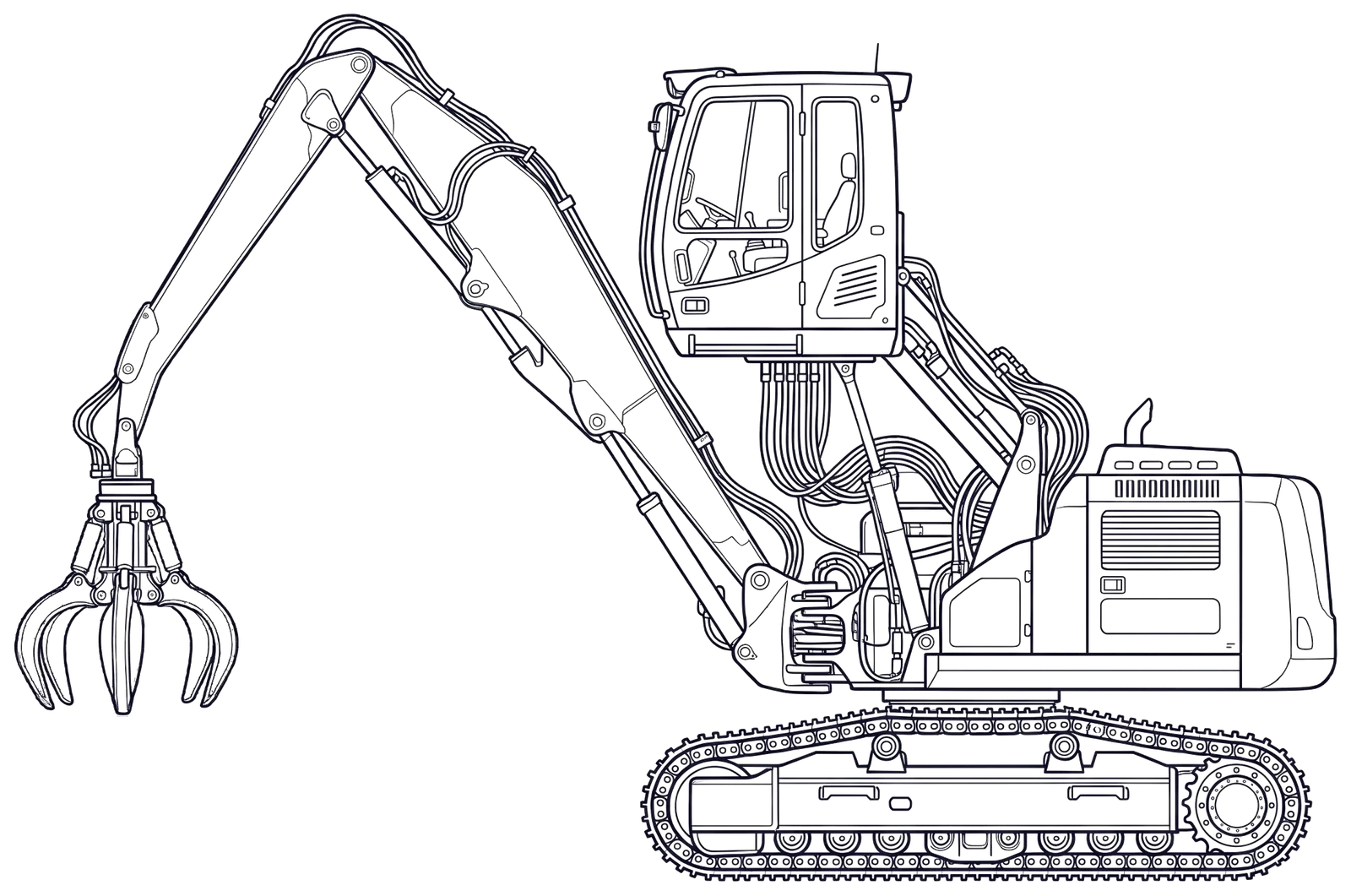
About · Liebherr LH60Overview
The Liebherr LH60 is a purpose-built material handler in the heavy-duty handling class, with an operating weight of 61,000 kg and an engine output of 258 hp. It is equipped with a bucket capacity of 1.1 m3, positioning it for high-throughput bulk and scrap operations. The machine reflects Liebherr's established engineering standards in the port and industrial material-handling segment.
Typical applicationsWhere this machine is used
Machines of this class are deployed across scrapyard sorting, port and terminal bulk-material handling, and large-scale demolition or waste-processing facilities. Their elevated operating weight and purpose-designed superstructures support continuous-duty cycles in environments where standard excavators would face accelerated wear. Industrial recycling plants and steel-mill material yards are also representative application settings.
Used-market inspectionWhat to check before buying
Inspection of any used material handler in this weight class should prioritise the condition of the slewing ring, upper-carriage attachment points, and boom-arm wear surfaces, as these components absorb the highest cumulative load in continuous-duty applications. Hydraulic system integrity, including cylinder seals, hose routing, and pump performance under load, warrants close assessment. Service history documentation, particularly evidence of scheduled oil and filter changes, is a reliable indicator of overall maintenance discipline. Structural crack inspection around the gantry base and counterweight mounting areas is advisable before finalising any purchase decision.
Current marketPrice position
The European market average for the Liebherr LH60 stands at EUR 95,000. Buyers evaluating this machine will typically benchmark it against comparable units from Fuchs, specifically the MHL360, and Sennebogen, specifically the 835, both of which compete directly in the heavy material-handler segment. Relative availability and condition spread across these three models will influence final transacted values at any given point in the market cycle.