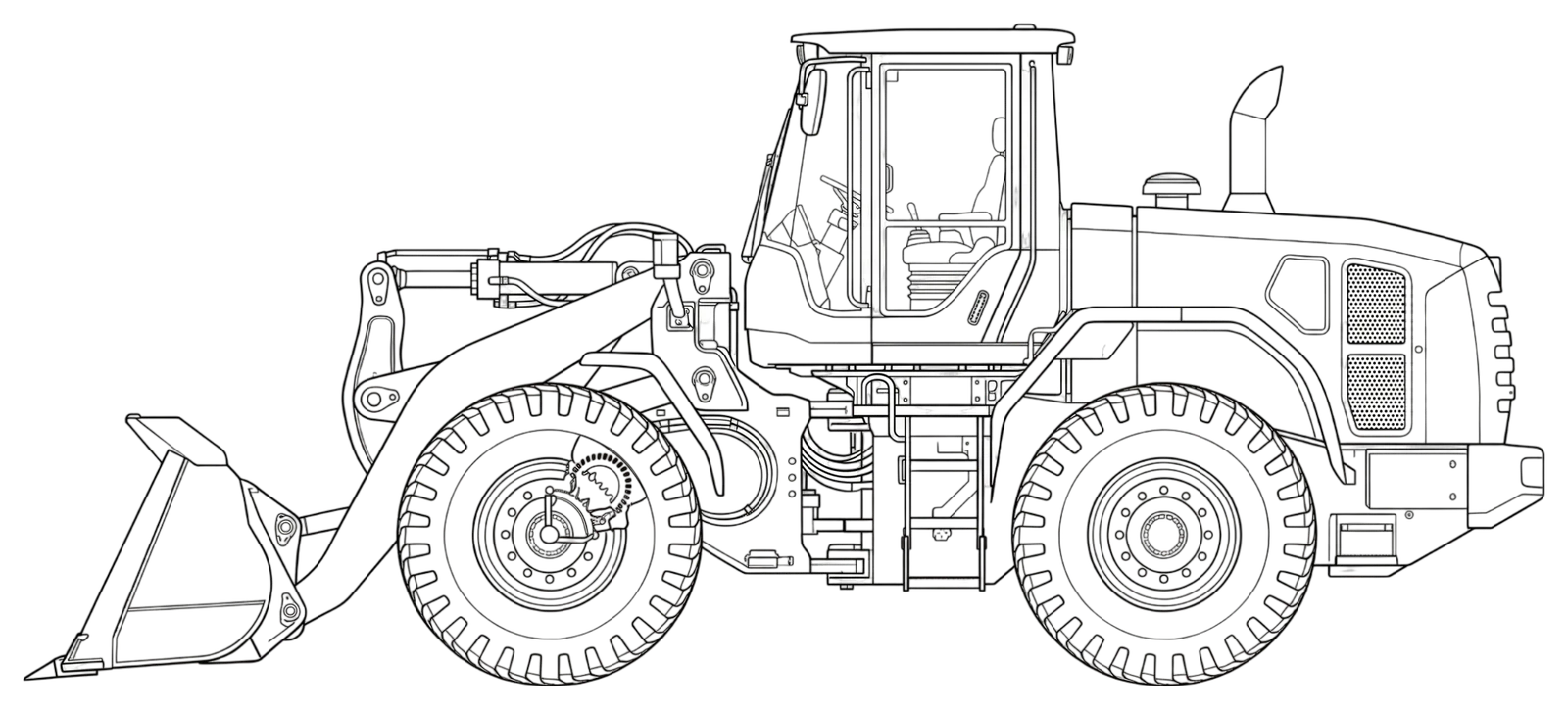
Over · Komatsu WA380Overzicht
The Komatsu WA380 is a mid-size wheel loader with an operating weight of 18,458 kg and an engine output of 192 hp, placing it firmly in the upper portion of the medium wheel-loader class. Equipped with a 3.3 m³ bucket, it offers a balance of payload capacity and maneuverability suited to a wide range of bulk-handling operations. The model has been in continuous production since 1995, giving it a long service history and a well-established parts and support network.
Typische toepassingenWaar deze machine wordt gebruikt
Machines in this weight and capacity class are primarily deployed in quarrying, aggregate handling, construction site earthmoving, and industrial bulk-material loading. The 3.3 m³ bucket makes the WA380 well suited to loading trucks, feeding crushing or screening plants, and stockpile management. Port and recycling yard operations also regularly draw on equipment in this segment where cycle-time efficiency and lift height matter.
Tweedehandsmarkt inspectieWat je moet controleren voordat je koopt
Prospective buyers should request full service records to verify scheduled maintenance intervals have been observed, as hydraulic system integrity and drivetrain condition are primary value drivers in this class. A thorough walk-around should cover tire wear and condition, given the significant replacement cost associated with the machine's operating weight. Bucket and cutting-edge wear, boom and linkage pin play, and the condition of hydraulic cylinder seals are standard inspection points. An oil-sample analysis from the engine, transmission, and hydraulic circuit provides objective data on internal wear that visual inspection cannot confirm. Where possible, a load-and-lift test under working conditions should be performed to verify lift capacity and hydraulic response.
Huidige marktPrijspositie
The WA380 competes directly against the Case 821 and the Liebherr L556 in the medium wheel-loader segment. Against the Case 821 the Komatsu is typically compared on powertrain refinement and long-term parts availability; against the Liebherr L556 buyers weigh the WA380's conventional torque-converter drivetrain against Liebherr's hydrostatic transmission, which affects fuel consumption profiles and maintenance requirements differently across duty cycles. Within the WA380 market itself, the principal attributes that move a machine within its price band are accumulated service hours, configuration choices such as high-lift boom or cold-weather packages, the presence of additional attachments, overall mechanical condition, and service history documentation.