Informacje · Fuchs MHL331Przegląd
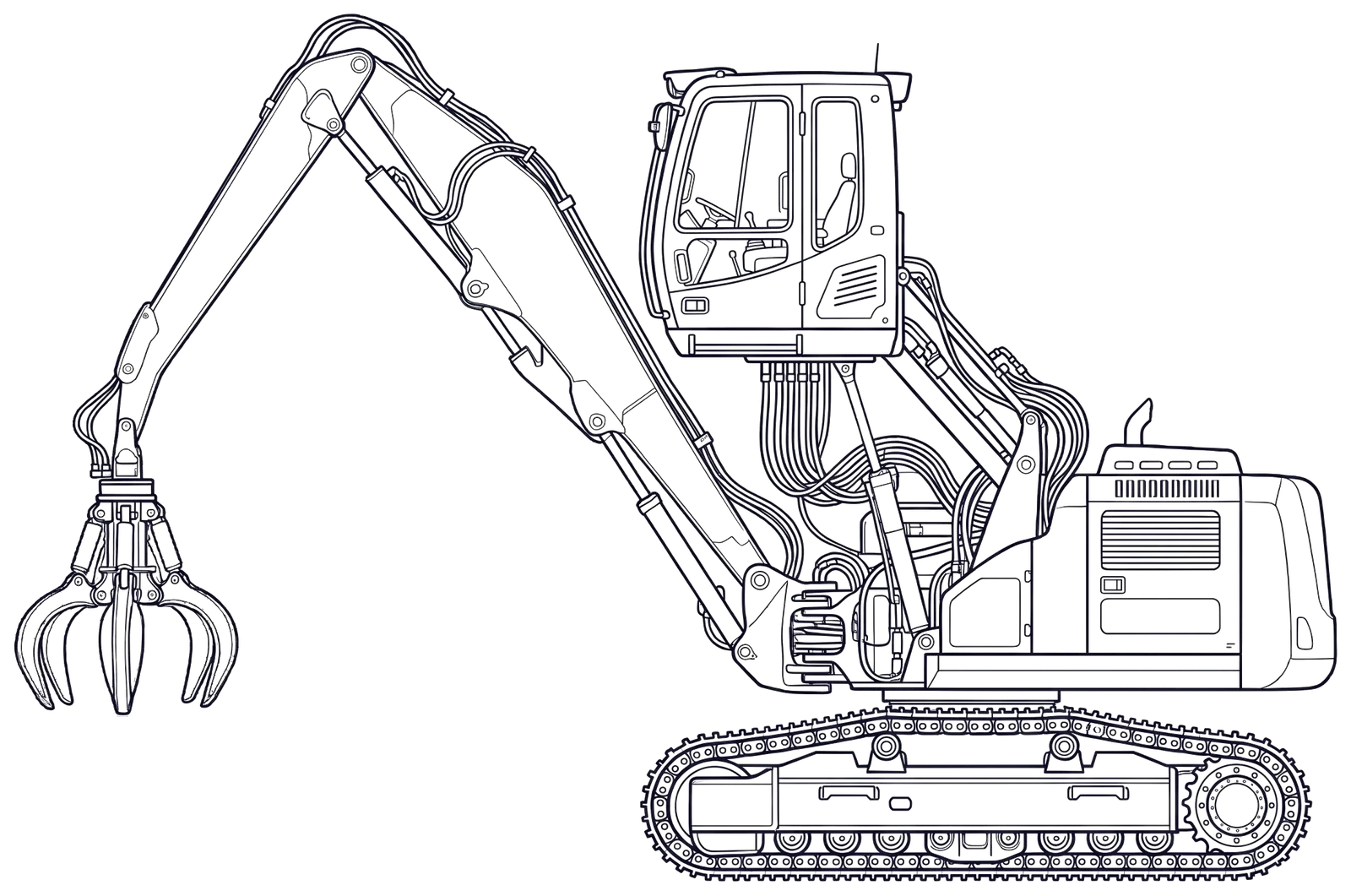
The Fuchs MHL331 is a purpose-built material handler in the 23,500 kg operating weight class, producing 154 hp and designed for high-cycle sorting, loading, and scrap-processing duties. It belongs to the dedicated rail-and-cab material-handler segment, distinguished from general-purpose excavators by its elevated cab, purpose-optimised hydraulic circuits, and rotating upper structure suited to stationary or semi-stationary work cycles. At this weight and power rating it sits in the mid-upper tier of the wheeled and tracked material-handler market, competing directly with machines from Sennebogen and Liebherr in the same duty bracket.
Typowe zastosowaniaGdzie ta maszyna jest używana
The MHL331 is used primarily in scrap yards, waste-transfer stations, port and inland-waterway terminals, and bulk-material handling yards where repetitive pick-and-release cycles demand sustained hydraulic output and operator visibility. Its weight class makes it well suited to feeding shredders, loading barges or rail wagons, and sorting mixed ferrous and non-ferrous streams. Operations requiring a stable, high-reach working envelope with grapple, magnet, or clamshell attachments are the core use case for this machine category.
Kontrola rynku wtórnegoCo sprawdzić przed zakupem
Buyers inspecting a used MHL331 should prioritise a full hydraulic circuit check, including pump output, slew-ring play, and cylinder seal condition, as these components sustain the highest cumulative load in high-cycle material-handling applications. The cab elevation mechanism, whether column or high-rise, should be operated through its full range and checked for hydraulic leaks and structural integrity. Attachment interfaces, quick-couplers, and any magnet or grapple electrical connections warrant close inspection for wear and compatibility. Engine hours should be verified against physical condition and cross-referenced with service records where available. Undercarriage condition on tracked variants and tyre or outrigger condition on wheeled variants are significant factors in assessing residual service life. A pre-purchase inspection by an independent engineer familiar with material handlers is advisable before committing to any unit.
Obecna sytuacja rynkowaPozycja cenowa
Within the mid-upper material-handler segment the MHL331 is cross-shopped most directly against the Sennebogen 818 and the Liebherr LH22. The Sennebogen 818 occupies a comparable weight bracket and is widely regarded for its dedicated material-handling pedigree and energy-recovery options, making it a frequent alternative for buyers prioritising fuel efficiency in continuous-duty cycles. The Liebherr LH22 brings Liebherr's broader service network and a proven hydraulic platform to the same class, appealing to operators who weight parts availability and resale recognition. The Fuchs MHL331 differentiates itself through its brand heritage in purpose-built handlers and its specific configuration options within this duty class. Within the MHL331's price band, the attributes that move a machine up or down include recorded service hours and documented maintenance history, cab configuration and elevation style, the attachment package fitted, undercarriage type and condition, and overall structural and hydraulic condition at inspection.