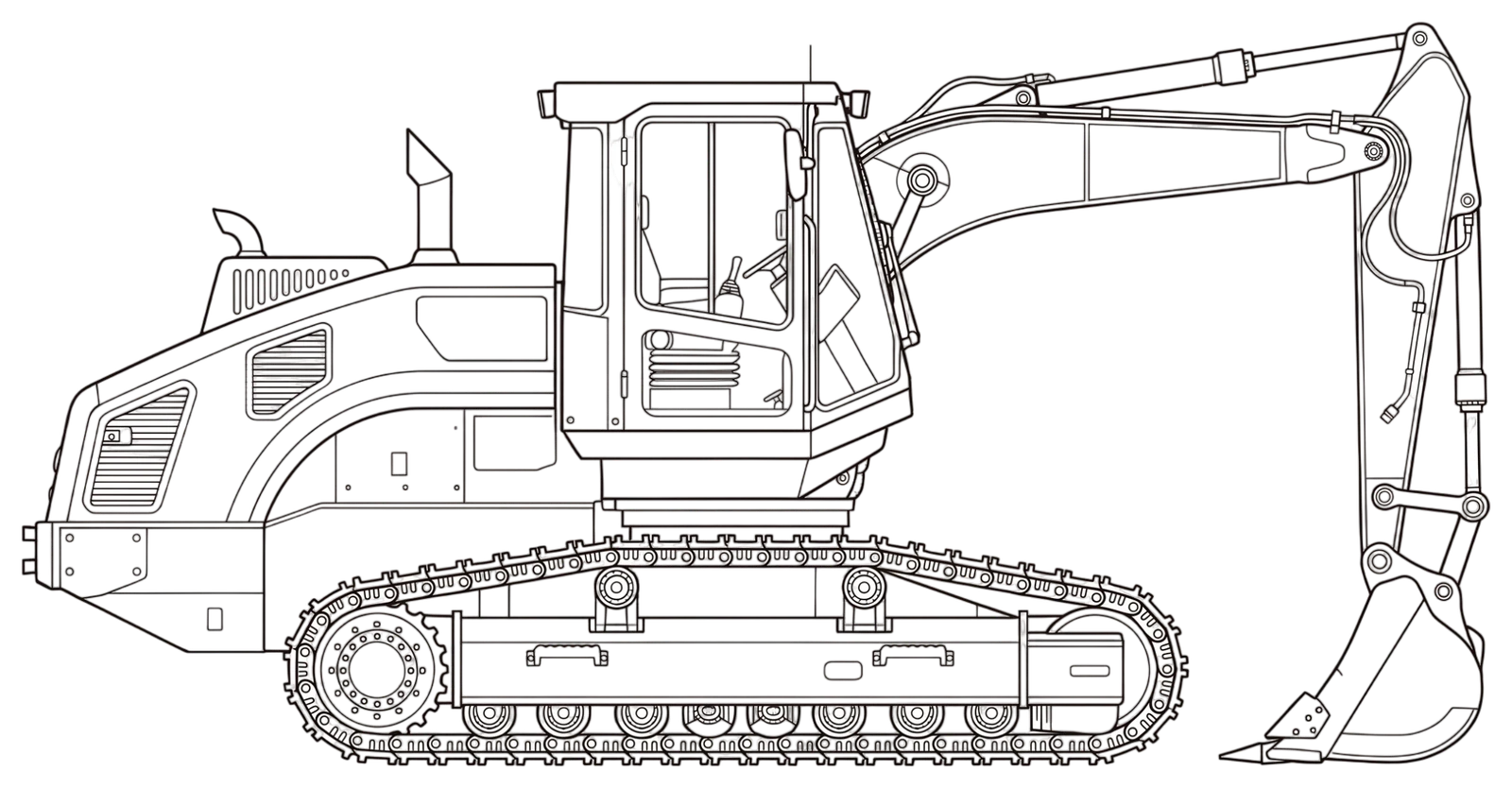
About · Caterpillar 390Overview
The Caterpillar 390 is a large hydraulic excavator positioned in the heavy-duty mining and quarry class, designed for high-volume earthmoving, rock breaking, and mass excavation work. It represents one of Caterpillar's flagship crawler excavator lines, built to operate under sustained, high-cycle conditions where machine durability and hydraulic output are primary requirements. Its scale and specification place it above general construction excavators and into a segment where reliability, structural integrity, and component longevity drive purchasing decisions.
Typical applicationsWhere this machine is used
The Caterpillar 390 is suited to large-scale civil infrastructure projects, open-pit mining, quarrying, dam construction, and heavy land-clearing operations where large bucket capacities and continuous duty cycles are required. It is also deployed in bulk material handling applications and major road or rail corridor development where production targets demand a machine of this output class. Operations requiring rock-breaking attachments or heavy lift configurations also make regular use of machines in this size range.
Used-market inspectionWhat to check before buying
Inspection of a used Caterpillar 390 should begin with a full undercarriage assessment, as track components represent one of the most significant wear items in this class and replacement is a substantial undertaking. Hydraulic system condition should be evaluated through pressure testing and a review of oil analysis records, with particular attention to pump output, cylinder seal integrity, and any evidence of heat-related degradation. The boom, stick, and bucket linkage points should be inspected for bushing wear and any weld repairs that may indicate overloading or impact damage. Engine condition is best assessed through documented service intervals, oil analysis history, and a review of any fault codes or electronic diagnostic records available from the onboard monitoring system. Buyers should request full service documentation and, where possible, Cat Product Link or equivalent telematics data to verify reported hours and identify any patterns of unplanned downtime.
Current marketPrice position
The Caterpillar 390 is cross-shopped primarily against the Komatsu PC390 and PC490, the Liebherr R 950 and R 960, and the Hitachi ZX390 and ZX490 in the large crawler excavator segment. Caterpillar's established dealer network and parts availability are frequently cited differentiators relative to European competitors such as Liebherr, while the Komatsu and Hitachi alternatives offer comparable hydraulic performance and are evaluated on serviceability and regional support infrastructure. Within the 390's own price band, the attributes that move a unit are accumulated service hours, maintenance history and documentation, undercarriage wear condition, whether the machine carries a standard or heavy-lift boom configuration, the presence of quick-coupler or specialty attachments, geographic location relative to major service centres, and overall structural condition including any history of crack repair or frame modification.