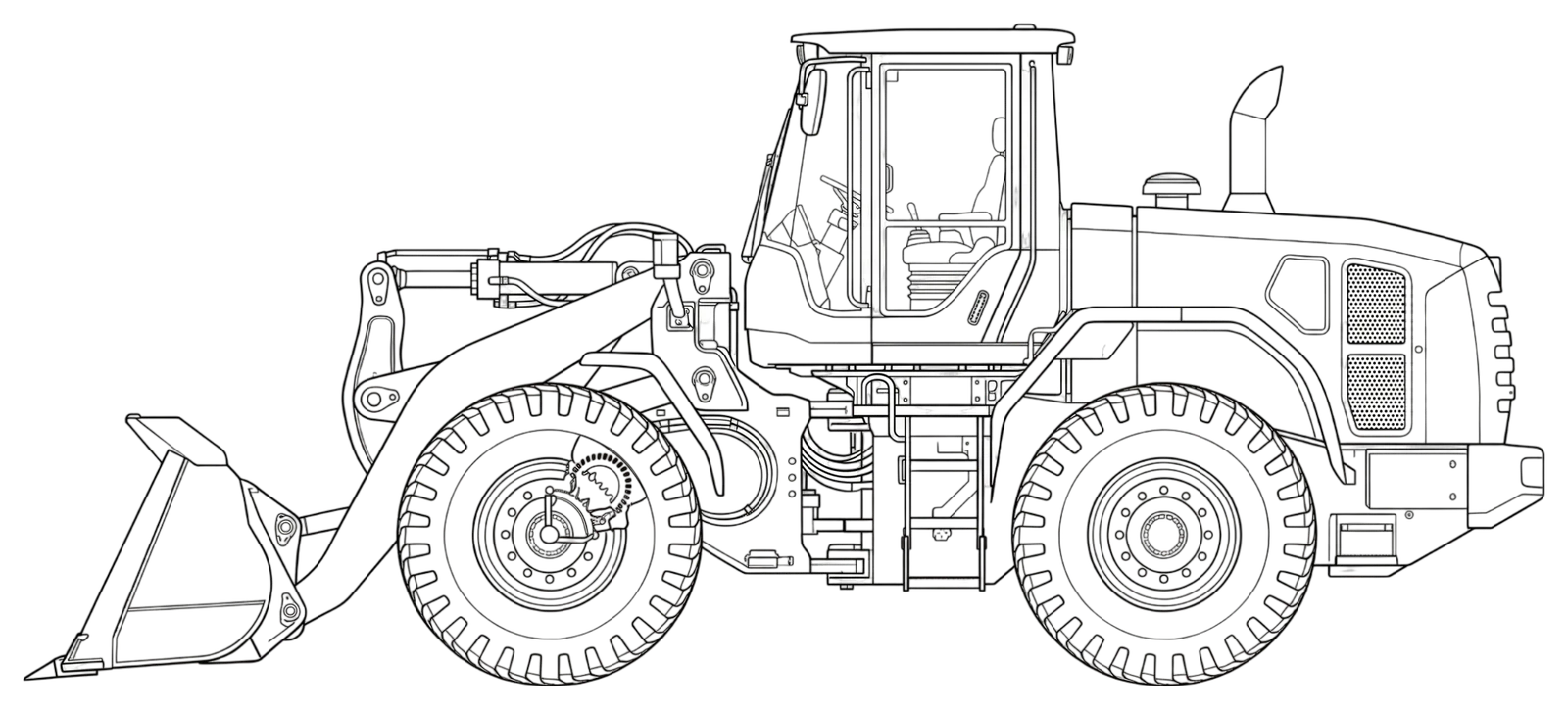
About · JCB 457Overview
The JCB 457 is a heavy-duty wheel loader in the 20-tonne operating class, producing 256 hp and equipped with a 3.5 m³ bucket capacity. It sits at the upper end of the mid-to-large wheel loader segment, positioned for high-throughput bulk material handling on demanding sites. With an operating weight of 20,534 kg, the machine delivers the tractive effort and payload capacity expected of this class while carrying JCB's characteristic Z-bar or parallel-linkage front-end architecture depending on configuration.
Typical applicationsWhere this machine is used
Wheel loaders in the 20-tonne class are routinely deployed in quarry face loading, aggregate stockpile management, bulk earthmoving, and heavy-cycle feed operations for crushers or screens. Port and bulk terminal operators use machines of this size for handling minerals, scrap, and bulk commodities where high bucket fill factors and fast cycle times are priorities. Construction and infrastructure contractors also deploy this class for cut-and-carry work, road-base preparation, and supporting large earthmoving fleets.
Used-market inspectionWhat to check before buying
Inspection of a used wheel loader in this class should begin with the articulation joint, which is a high-stress point subject to wear in the pivot pins and bushings, particularly on machines used in tight-cycle quarry or face-loading applications. Buyers should request oil sampling records for the engine, transmission, and hydraulic circuits, as these provide objective evidence of internal wear trends beyond what visual inspection reveals. The torque converter and transmission should be assessed under load, including checking for smooth progression through all ranges without slip or hesitation. Bucket and linkage wear, including pin and bore tolerances in the Z-bar or parallel-linkage arms, should be measured rather than estimated visually. Tyre condition carries significant weight on machines of this operating weight, so remaining tread depth and any sidewall damage should be recorded and factored into the evaluation. Cab condition, including ROPS/FOPS certification status, display systems, and visibility aids, is increasingly relevant to site compliance requirements. Finally, buyers should verify that the machine's hour meter reading is consistent with service intervals recorded in the maintenance documentation, and should treat any discrepancy between recorded services and displayed hours as a prompt for deeper technical scrutiny.
Current marketPrice position
Within the 20-tonne wheel loader class, the JCB 457 is most commonly cross-shopped against the Hyundai HL760 and the Volvo L150. The Volvo L150 is a long-established benchmark in this segment with a strong dealer network and well-documented residual performance, giving buyers a familiar reference point on specifications and support coverage. The Hyundai HL760 typically competes on total-cost positioning and offers comparable power and bucket sizing. The JCB 457 differentiates itself through JCB's own powertrain integration and cab environment, which is a relevant consideration for operators evaluating whole-life running costs and parts availability through a single manufacturer. Within the used market, the attributes that move a specific unit within its price band include recorded machine hours, full-service history documentation, bucket and linkage condition, tyre wear and specification, the presence of attachments such as forks or high-tip buckets, and overall structural condition including any history of frame or boom repairs. Machines in single-owner, well-documented fleet use with lower hours and original tyres command a stronger position than high-hour or multi-owner units with incomplete records.