About · Manitou MRT1635Overview
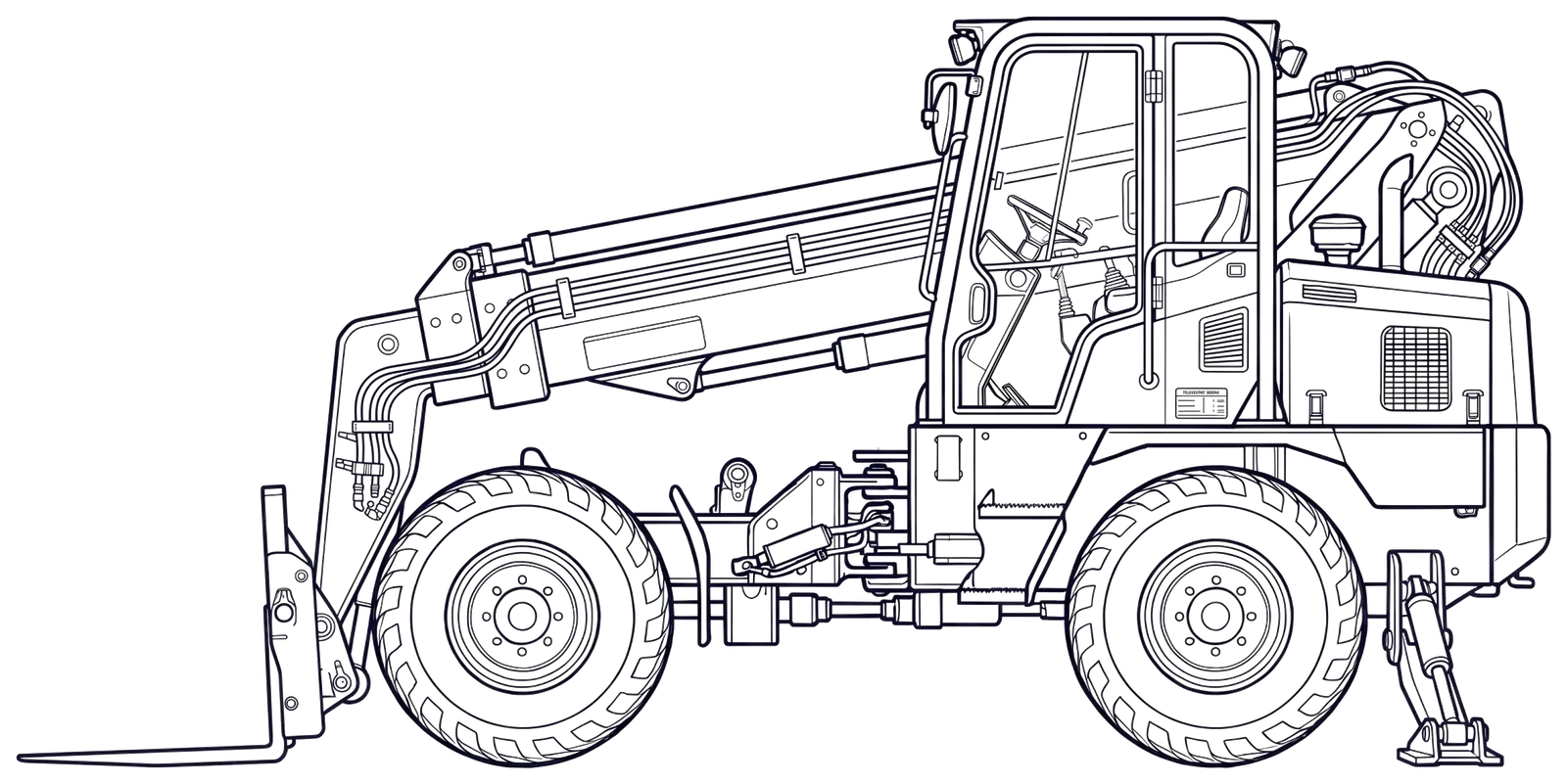
The Manitou MRT1635 is a rotating telehandler, a machine class that combines the reach and lift capability of a fixed-boom telehandler with 360-degree superstructure rotation, allowing it to work independently of vehicle repositioning. It sits in the mid-to-heavy segment of the rotating telehandler category, distinguished from compact and non-rotating models by its ability to serve as a crane substitute on congested or confined sites. The rotating platform makes it directly comparable to purpose-built industrial cranes in certain lift-and-place applications while retaining road mobility and multi-attachment versatility.
Typical applicationsWhere this machine is used
The MRT1635 class is used on construction sites where loads must be placed with precision at height without repositioning the carrier, including steel erection, precast panel setting, and facade work. In industrial and infrastructure maintenance contexts, rotating telehandlers serve as mobile elevated work platforms when fitted with a personnel basket, and as material handlers in recycling yards, ports, and agricultural facilities. The combination of travel capability and slewing function also makes these machines productive in wind-turbine maintenance staging and event infrastructure build-out, where crane hire would otherwise be required.
Used-market inspectionWhat to check before buying
Inspection of a used rotating telehandler should prioritise the slewing ring and its gear teeth, as wear or play in this component is costly to remedy and directly affects lifting safety certification. The boom telescope cylinders, wear pads, and boom-tip attachment coupler should be checked for play, scoring, and seal integrity. Hydraulic hose routing along the boom is subject to fatigue cycling and should be examined for chafing and weeping. Service records covering the load-management system calibration and annual thorough examination certificates are essential, as regulatory compliance affects the machine's immediate usability on regulated sites. Tyre condition matters more on rotating telehandlers than on compact models because uneven ground reaction forces during slewing accelerate uneven wear. Confirm that the attachment hydraulic circuit pressures have been set and recorded correctly for each attachment in use, and that all safety interlocks, including overload cut-out and outrigger-interlock systems, are fully functional before purchase.
Current marketPrice position
Within the rotating telehandler segment, the MRT1635 competes directly with machines from Merlo, JLG, and Liebherr that occupy the same load-moment envelope. Manitou's position in this class is built on a wide global dealer network and a broad attachment ecosystem, which buyers weigh against Merlo's reputation for refined hydraulic response and Liebherr's engineering precision. The attributes that move a used MRT1635 within its price band are accumulated engine hours, service history documentation, boom and slewing-ring wear, tyre condition, the presence of a factory-fitted load-management system, and the attachment complement included in the sale. Machines configured with a personnel basket, hook attachment, and fork carriage command stronger interest than bare-boom examples. Geographic availability of dealer support also influences residual positioning, as parts lead times affect operational downtime risk for buyers.