About · Manitou MRT3050Overview
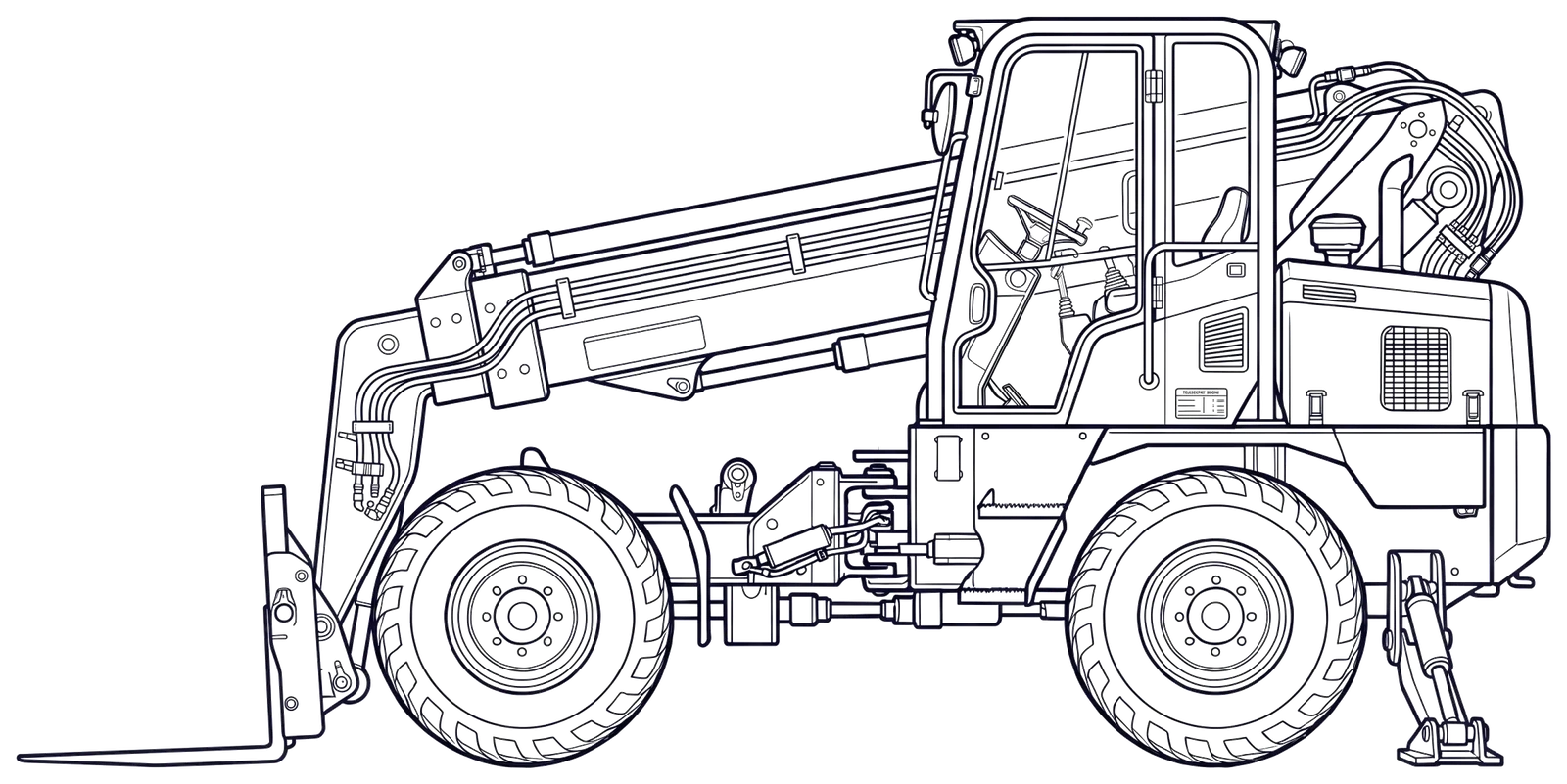
The Manitou MRT3050 is a rotating telehandler, a machine class that combines the reach and lift capacity of a conventional telescopic handler with a 360-degree rotating superstructure. This configuration allows operators to position loads without repositioning the carrier, making it a structurally distinct product from fixed-boom telehandlers. Within the Manitou range, the MRT series occupies the rotating segment, positioned above standard MRT compact models in terms of reach and capacity envelope.
Typical applicationsWhere this machine is used
Rotating telehandlers of this class are used extensively in civil construction, industrial plant maintenance, infrastructure projects, and precast concrete installation where loads must be placed with precision from a fixed machine position. The 360-degree rotation makes the MRT3050 suited to confined sites where maneuvering a conventional telehandler repeatedly would be impractical. Rental fleets also deploy machines in this class for heavy lifting contracts, wind energy component handling, and stadium or large-structure fit-out work.
Used-market inspectionWhat to check before buying
Inspect the rotating ring gear and slewing bearing for play, scoring, or uneven wear, as these components are specific to rotating telehandlers and their condition is a meaningful indicator of machine history and maintenance quality. Check the telescoping boom sections for straightness, wear pad condition, and hydraulic cylinder seal integrity, paying particular attention to any evidence of overloading or side-loading. Verify that outrigger cylinders extend and retract smoothly and that the interlocks preventing boom operation before outriggers are deployed function correctly. Review service records for boom inspection intervals and any history of structural repairs. Confirm that all attachments presented with the machine are genuine Manitou-approved items with matching documentation, as third-party attachments can affect certification status. A full function test under load conditions and a review of the on-board load management system calibration are standard due-diligence steps for this machine class.
Current marketPrice position
The MRT3050 competes directly with rotating telehandlers from Liebherr, Merlo, and JLG in the same capacity and reach segment. Against fixed-boom telehandlers, the rotating superstructure commands a structural premium in the used market, as the additional slewing system and outrigger complexity represent meaningful engineering differentiation. Within the used MRT3050 population itself, hour count is the primary driver of position within the price band, followed by boom and hydraulic condition, the presence of factory-fitted attachments such as man baskets or hook blocks, and whether the machine has a documented service history. Configuration variables, including outrigger type, cab specification, and joystick versus lever controls, also influence where a given unit sits relative to others of the same model year. Machines with verified low hours, full service records, and matched attachments occupy the upper end of the band, while high-hour units or those with incomplete documentation trade toward the lower end.