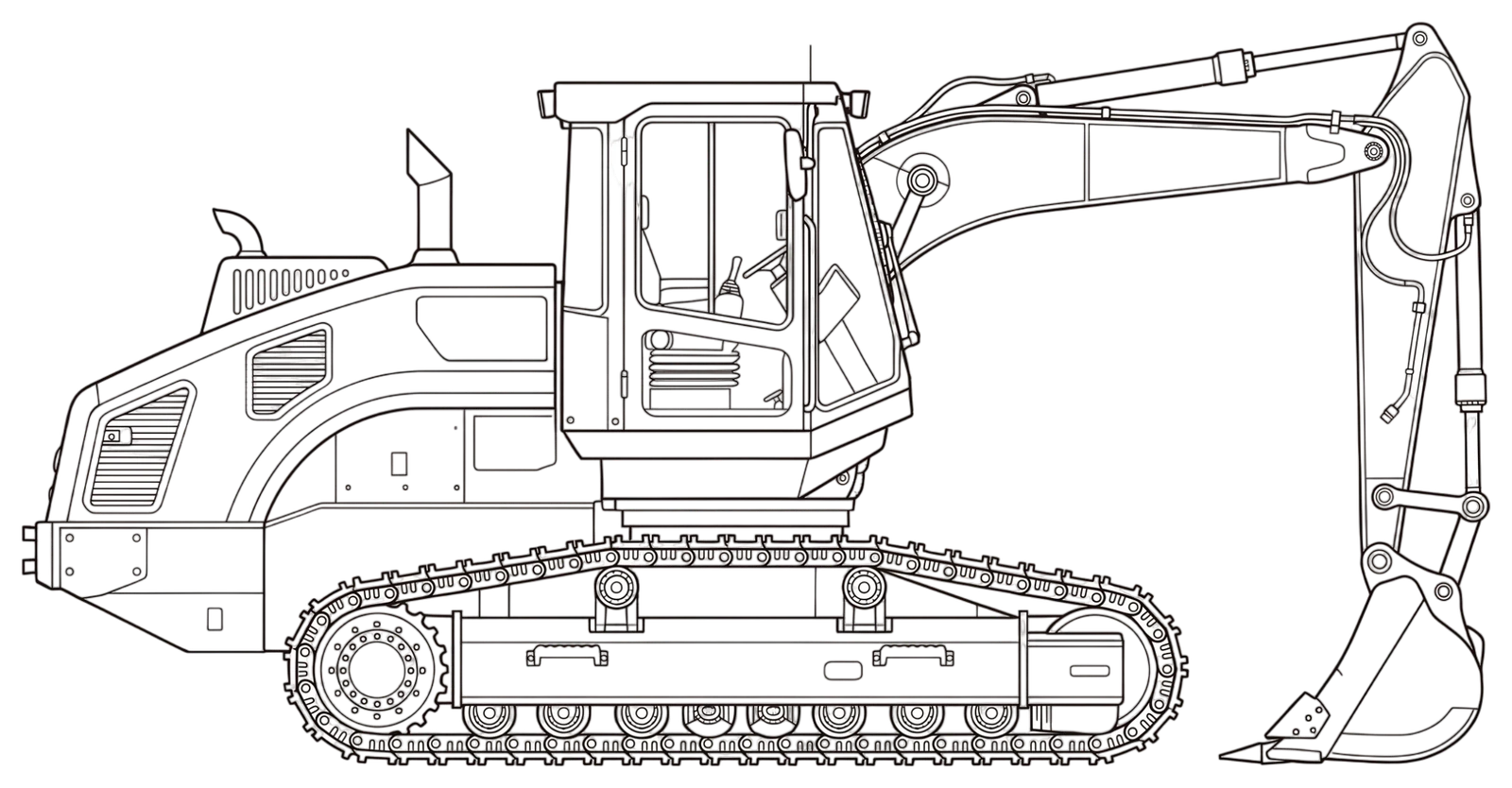
About · Volvo EC220Overview
The Volvo EC220 is a 22-tonne crawler excavator positioned in the 20-to-25-tonne middle segment of the hydraulic excavator market. It delivers 173 hp through its engine and operates with a standard bucket capacity of 1.2 cubic metres, placing it firmly in the general-purpose medium class. Production began in 2015 and the model remains in active manufacture, meaning used examples span a broad age and specification range. Volvo's engineering emphasis on hydraulic efficiency and operator ergonomics is a consistent characteristic across the production run.
Typical applicationsWhere this machine is used
The EC220 is suited to earthmoving, foundation work, utility trenching, and road-construction groundworks where a 22-tonne machine offers the reach and breakout force required without the logistics burden of a larger class. It is commonly deployed on civil infrastructure projects, site-clearance operations, and bulk-excavation tasks where a 1.2 cubic metre bucket provides productive cycle times. The machine's weight class also makes it practical for projects with moderate ground-bearing constraints or restricted transport access.
Used-market inspectionWhat to check before buying
Inspection of any 22-tonne crawler excavator in this class should prioritise undercarriage wear, as track rollers, idlers, and link assemblies represent a significant share of lifecycle cost and condition varies considerably with the terrain in which the machine has worked. Hydraulic systems should be checked for cylinder seal condition, hose integrity, and any evidence of contamination, as the EC220's hydraulic efficiency is central to its class position and degraded fluid quality accelerates component wear. Service history documentation is material to valuation: verified records of scheduled maintenance, filter changes, and any major component replacements reduce buyer risk substantially. Where a machine has been fitted with attachments, confirm that auxiliary hydraulic ratings match the attachment specifications and that any quick-coupler fitment has been properly integrated. Cab and control condition reflects operator care across the machine's working life and is a practical indicator of overall maintenance standards. For machines produced from 2015 onward, verify software and telematics compatibility if remote fleet management is a procurement requirement.
Current marketPrice position
In the 20-to-25-tonne crawler excavator segment, the EC220 is regularly cross-shopped against the Hitachi ZX210 and the JCB JS220. The Hitachi ZX210 sits slightly below the EC220 on operating weight and is associated with a strong dealer-service network inherited from its construction-equipment lineage, while the EC220 matches or exceeds it on rated engine output at 173 hp. The JCB JS220 occupies a comparable weight class and competes directly on general-purpose versatility, though Volvo's reputation for cab comfort and fuel-management systems differentiates the EC220 for buyers prioritising operating economy over a long ownership cycle. Within the EC220's own price band, the primary value drivers are accumulated service hours, maintenance history documentation, machine configuration (long-reach boom, reduced-tail-swing, or standard), installed attachments such as quick couplers or auxiliary hydraulic lines, geographic operating conditions, and overall physical condition of undercarriage components and structural elements.