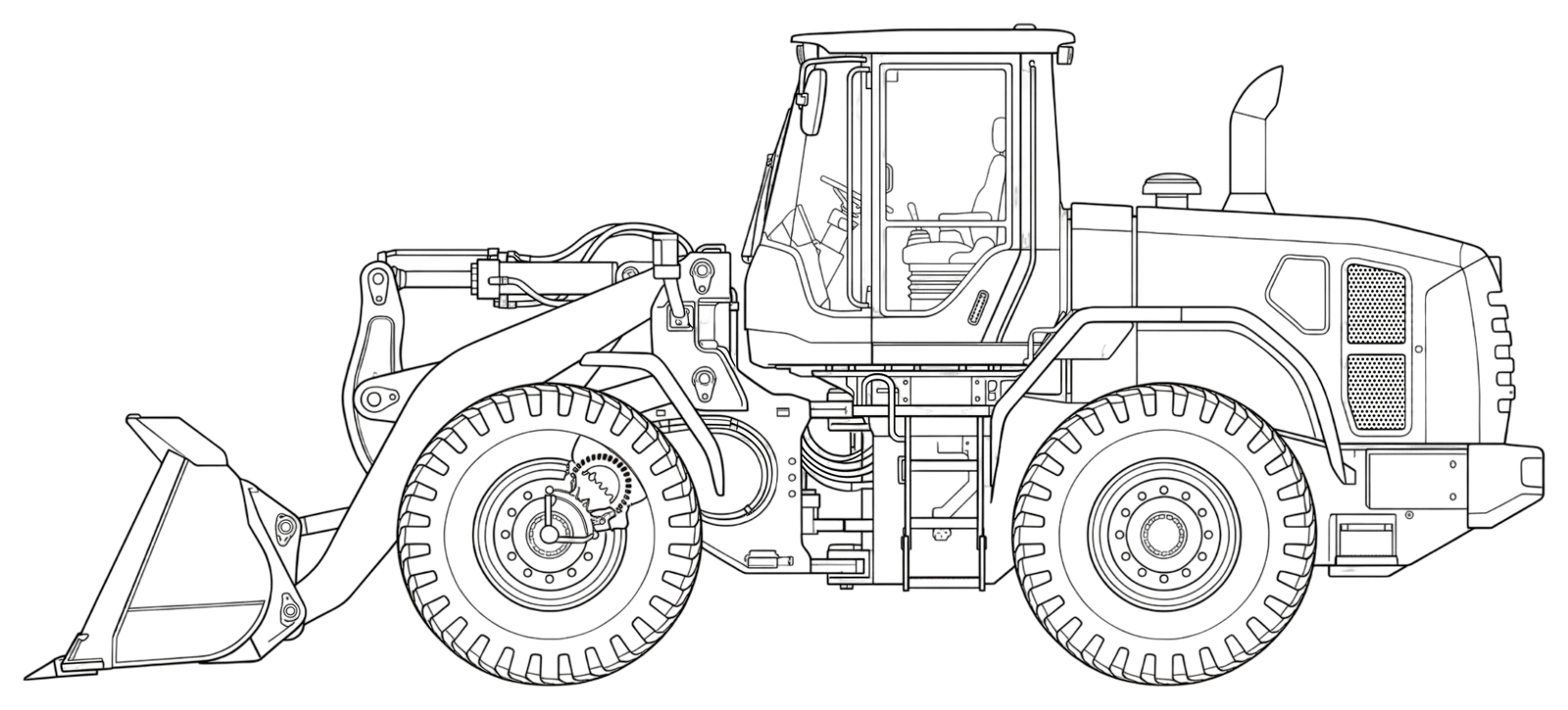
About · Volvo L50Overview
The Volvo L50 is a compact wheel loader positioned in the small-to-medium segment of the wheel-loader class, designed to deliver a balance of maneuverability and lifting capacity suited to constrained working environments. It is built around Volvo's integrated load-sensing hydraulic system and full-box section lift arms, features that are consistent across the L50 production run and contribute to its reputation for structural durability. As a Volvo product, the L50 carries the manufacturer's characteristic emphasis on operator comfort and serviceability, placing it among the more specified machines in its size class.
Typical applicationsWhere this machine is used
Compact wheel loaders in the L50 class are typically deployed in construction-site material handling, landscaping, agricultural yard work, and municipal maintenance operations where a full-size loader would be impractical. The machine's short turning radius and responsive hydraulics make it well suited to loading trucks in confined yards, moving bulk materials such as aggregate, sand, and wood chip, and supporting operations that require frequent attachment changes. Its size class also sees regular use in light demolition support, snow-removal duties, and indoor or partially enclosed industrial environments.
Used-market inspectionWhat to check before buying
Inspection of any used L50 should begin with a thorough review of available service documentation, as a complete maintenance record is one of the strongest indicators of how the machine has been operated and whether scheduled component work has been carried out. Prospective buyers should assess tyre condition carefully, as replacement across all four positions represents a significant outlay that should be factored into acquisition planning. The hydraulic system warrants close attention: check all cylinders for seal weep, verify smooth and consistent response across the full range of loader and steering movement, and look for contamination in the fluid. Drivetrain evaluation should include axle oil condition, brake function, and transmission engagement through all ranges. Structural inspection of the lift arms, bucket, and pivot points is essential, paying particular attention to weld repairs, crack propagation at stress points, and wear in the loader linkage pins and bushings. A pre-purchase oil-sample analysis covering the engine, transmission, and axles is advisable for any machine whose history is incomplete or uncertain.
Current marketPrice position
The Volvo L50 competes directly with machines such as the Caterpillar 930, the Komatsu WA200, and the Case 521, all of which occupy a comparable operating-weight and bucket-capacity band within the compact-to-mid wheel-loader segment. Against these alternatives, the L50 is commonly evaluated on the basis of its load-sensing hydraulic response, cab ergonomics, and the depth of the Volvo dealer-service network in a given region. Within the L50's own price band, the attributes that move a specific machine toward the higher end of the range include low recorded hours, factory-fitted quick-coupler systems, the presence of original or well-matched attachments such as pallet forks or high-tip buckets, documented service history, and overall mechanical and cosmetic condition. Machines configured with ride-control, weighing systems, or climate-controlled cabs also tend to command a stronger position relative to base-specification examples. Conversely, high hours, absent service records, worn tyres, and hydraulic or transmission concerns place a unit below the class average.