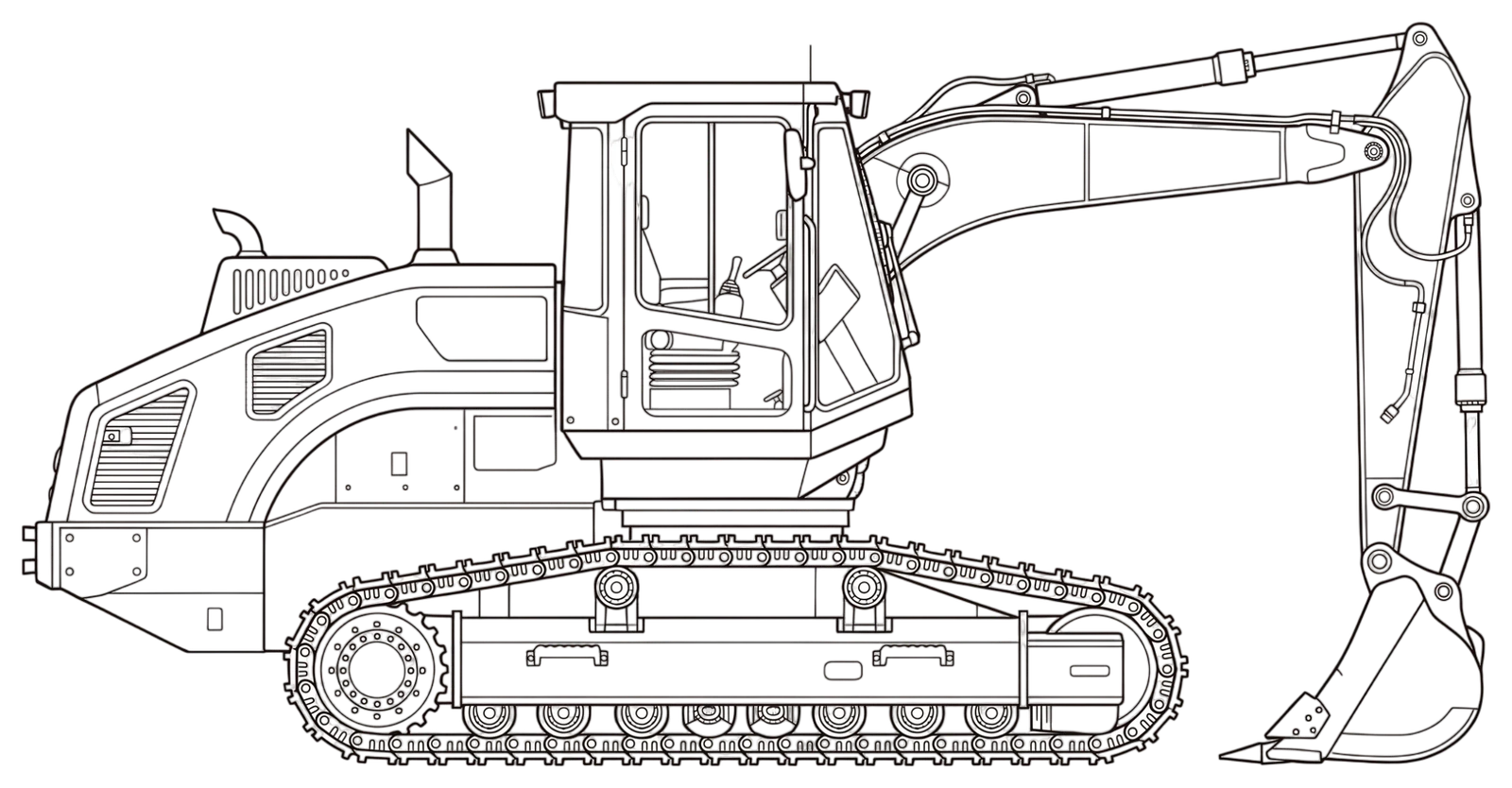
About · Volvo EC350Overview
The Volvo EC350 is a large crawler excavator in the 35-tonne class, positioned at the upper end of the mid-size heavy excavator segment. It operates at 37,150 kg and delivers 307 hp, paired with a 1.74 m3 bucket capacity. These figures place it in direct competition with other high-output crawler excavators intended for demanding earthworks and civil construction cycles.
Typical applicationsWhere this machine is used
Excavators in this weight and power class are suited to large-scale earthmoving, deep foundation work, bulk material loading, and infrastructure projects such as road construction and pipeline laying. The 1.74 m3 bucket capacity supports efficient truck-loading cycles in quarry and mass-excavation environments. This class is also regularly deployed in demolition support and heavy land-clearing operations where reach, digging force, and machine stability are priorities.
Used-market inspectionWhat to check before buying
Inspection of a used EC350 or any machine in this class should prioritize a full hydraulic pressure test across all circuits, including auxiliary lines if attachments are present. Undercarriage wear is a significant cost driver in this weight class and warrants careful measurement of track rollers, idlers, sprockets, and track pad thickness. The boom, arm, and bucket mounting points should be inspected for cracking, weld repairs, and bushing wear. Engine condition should be assessed via oil analysis and a review of service records, with particular attention to cooling system integrity given the power output involved. Buyers should verify that the machine has no outstanding fault codes and request a demonstration of all functions under load where possible.
Current marketPrice position
The EC350 competes most directly with the Caterpillar 336 and the Doosan DX350 in the 35-tonne crawler excavator segment. Relative to the Caterpillar 336, buyers assess differences in dealer service network coverage, undercarriage specification, and technology integration. Against the Doosan DX350, the comparison typically centers on engine output, hydraulic performance, and lifecycle support costs. Within this class, the attributes that move a unit within its price band include recorded service hours, configuration, such as long-reach or standard boom and arm setup, the presence and condition of fitted attachments, geographic service history, and overall mechanical and structural condition. Machines with complete service documentation, lower accumulated hours, and factory or certified attachments command stronger positioning in the market.